
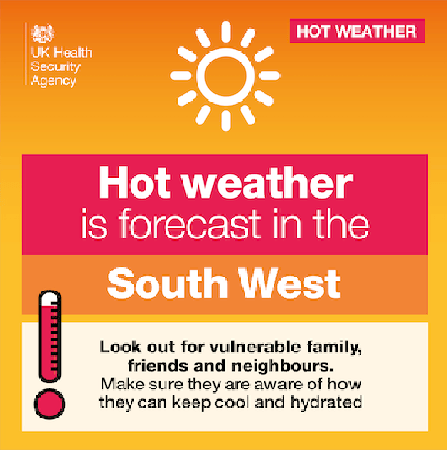
A HEAT-heath alert for Somerset has been upgraded to ‘amber’ from Tuesday morning (August 11), the second highest level used by the UK Health Security Agency (UKHSA).
The warning will be active from 9 am on Tuesday until 9 pm on Friday (August 14) and means there is an increased risk of death for people older than 65 years or anybody with pre-existing health conditions, including respiratory and cardiovascular diseases.
The Met Office is forecasting temperatures may peak at 33 to 34 Centigrade in parts of Somerset on Wednesday and Thursday, before cooling to the mid-20s by Friday.
The amber alert comes after UKHSA estimated nearly 3,000 people died in previous heatwaves in May and June this year, nearly twice the number of heat-associated deaths for the whole for 2025.
UKHSA principal environmental public health scientist Dr Ross Thompson said: “These figures highlight the significant danger that very hot weather can pose to people’s health.
“This is particularly true for those who are more vulnerable, including older adults and people with underlying medical conditions.”
UKHSA acting public health consultant Polly Ashmore said: “Periods of hot weather can result in serious health outcomes, especially for older adults, and it is therefore important that everybody takes sensible precautions while enjoying the sun.
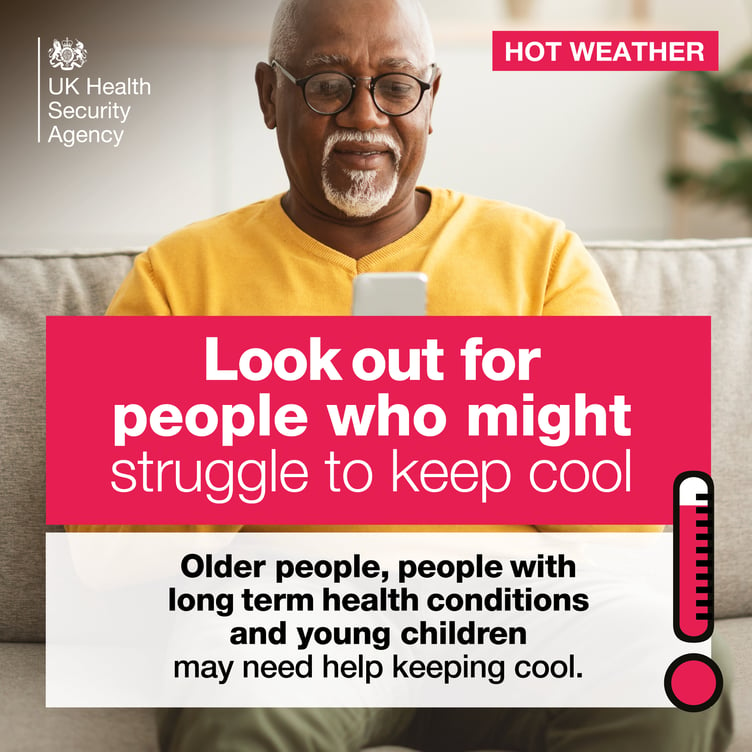
“We are urging health and social care services in affected regions to ensure they are prepared, and reminding people to look out for elderly relatives, neighbours, and those with underlying health conditions, making sure they are aware of the forecast and following the necessary advice.
 Final preparations underway for Dunster Show celebration of countryside life
 Personalised care now available through West Somerset micro providers network
 Check planning applications and decisions near you in West Somerset and Exmoor
  Owner traced of escaped skunk trapped by Tropiquaria Zoo as reports of more come in
“Simple steps such as staying hydrated, avoiding the sun during the hottest part of the day, and keeping your home cool are some of the key ways to help keep yourself and others safe during periods of hot weather.”
Health Secretary, Yvette Cooper said: “The sweltering heat has had a serious impact this summer on people’s health and on our NHS.
“For many years, we have been used to winter pressures in our NHS and the need to support those who are vulnerable in the coldest weather.
“But, now we are seeing the summer heat have an increasingly serious impact on the health of thousands of people, and on the pressures facing our NHS, too.
“My thoughts are with all those who have lost loved ones as a result of the long and intense heatwaves in recent months.
“And my heartfelt thanks go to the NHS staff, care workers, and emergency responders who have worked tirelessly through these exceptionally busy and challenging months to protect and care for people affected by the heat.”
UKHSA said ways to help keep cool in your home include:
- Shading or covering windows
- Closing windows and curtains in rooms facing the sun
- Then, opening windows when the air feels cooler outside, such as at night, to try to get air flowing through the home
- Using electric fans if the air temperature is below 35C, but not to aim fans directly at your body as it can lead to dehydration
- Turning off lights and electrical equipment not in use, and cooking at cooler times of the day
- Move to a cooler part of the house, especially for sleeping, if possible
- It may be cooler outside in the shade or in a public building, such as places of worship, local libraries, or supermarkets, so consider a visit as a way of cooling down
Actions which can be taken to help stay safe in the hot weather include:
- Do physical activity such as exercise or walking the dog, during early morning or the evening
- Drink plenty of fluids and limit alcohol intake
- Check on family, friends, and neighbours who may be at higher risk of becoming unwell, and if you are at higher risk, ask them to do the same for you
- Know the symptoms of heat exhaustion and heatstroke and what to do if you or somebody else has them
- Try to avoid direct sunlight, especially between 11 am and 3 pm when UV levels are highest
- If going out during this time, cover up with suitable clothing, wear a wide-brimmed hat and sunglasses, seek shade, and apply sunscreen liberally and re-apply frequently
Comments
This article has no comments yet. Be the first to leave a comment.