

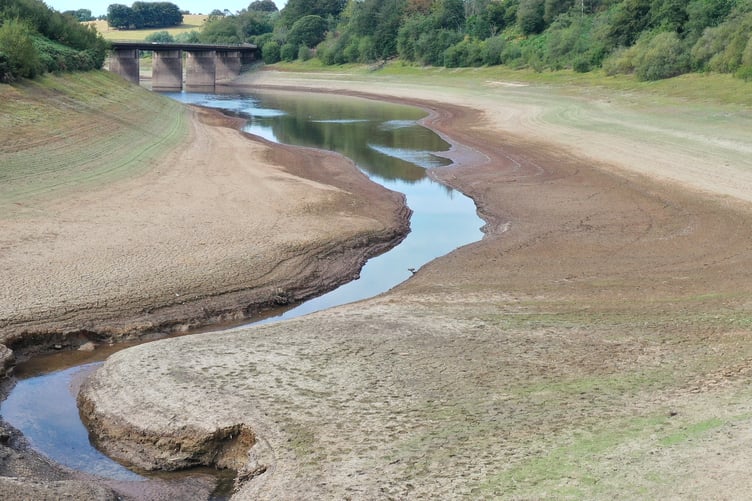
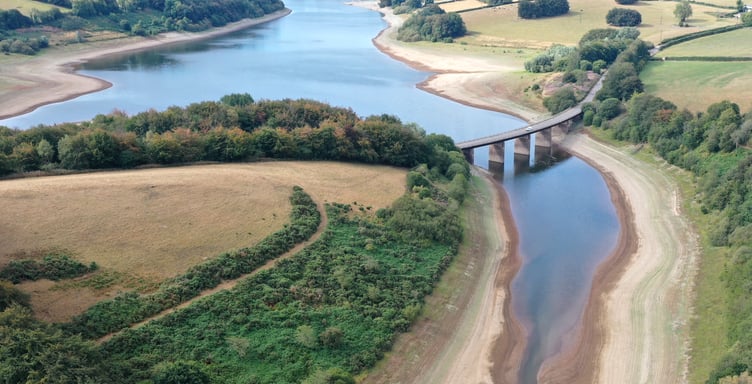
THE impact of the Westcountry’s drought has been dramatically illustrated by images captured by drone of the giant Wimbleball Lake, on Exmoor.
The reservoir, which can hold 21,320 million litres of water, is currently only half-full - or, half-empty.
Yet, already it is beginning to look as it did in the 2022 drought year when water levels fell by the end of the summer to a record low of 17 per cent.
Exposed banks can be seen baked dry by the four recent heatwaves experienced in Somerset, before more excessively hot weather was experienced this week.
Wimbleball is the third largest of South West Water’s (SWW) 17 reservoirs, and only two others are less full in percentage terms.
The drought saw SWW introduce a hosepipe ban from Saturday (August 8) for all its customers in Devon and Somerset.
A spokesperson said: “The hosepipe ban is necessary to ensure we can continue to supply enough water to meet people’s essential needs.
“We have seen a prolonged period of hot and dry weather, with record temperatures and rainfall well below seasonal averages over many months.
 South West Water lambasted by MP for banning hosepipes but not fixing leaks
 Hot weather warning issued for Somerset after nearly 3,000 die in UK heatwaves
 Final preparations underway for Dunster Show celebration of countryside life
 Personalised care now available through West Somerset micro providers network
“Along with continuous high demand for water, this has caused increasing pressure on reservoirs and available water resources.
“Customers must not use hosepipes for non-essential purposes while the ban is in place.”
The spokesperson said water could still be used as normal for drinking, washing, and cooking, and many usual activities could be carried out without a hosepipe, such as using a watering can to water plants, or a bucket and sponge to wash a car.
Wessex Water, which serves most of West Somerset and shares the Wimbleball reservoir, is asking people to help it avoid the need for a hosepipe ban by using water wisely and cutting back on non-essential use.
Water supply director Will Willoughby warned: “If demand does not reduce, we will need to introduce more formal restrictions to protect water supplies, which is why we are asking customers to work with us now to help avoid this.
“We know a hosepipe ban would not be welcome news for our customers, especially during the summer holidays.
“A ban is a last resort for us, and we do not want to introduce one, but we do need customers to help.
“If all customers can make small changes to their daily water use habits, this will make a big impact and help keep water flowing for each other, businesses, and the environment.'”
Mr Willoughby said water resources across the region remained stable, with surface water reservoirs 58 per cent full at the end of July.
He said: “No restrictions have been required in the region for 50 years, but they remain an option to protect water resources for customers, communities, and the environment over the longer term.”
Mr Willoughby said demand was currently more than a 30 per cent above average for this time of year, the equivalent of nearly 4,000 hosepipes running constantly every day, which was impacting underground reservoirs, which normally replenished quickly.
Comments
This article has no comments yet. Be the first to leave a comment.