

AMATEUR radio operators provided a vital lifeline for a 12-year-old Dulverton girl who became unconscious with an epileptic seizure.
They were able to alert the emergency services when all mobile phones failed on a remote Exmoor campsite near Wimbleball Lake.
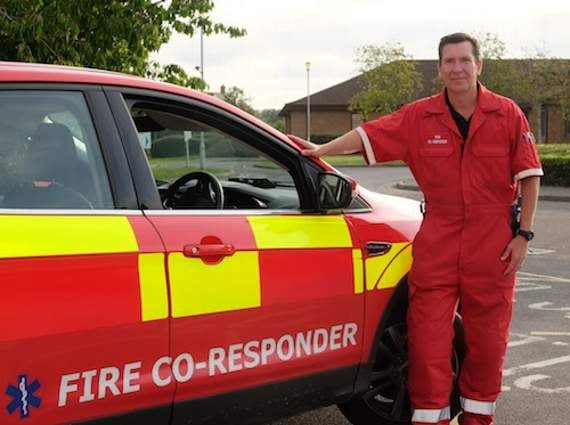
And while an ambulance was searching for the site at midnight, first-responder Garry Austin-Thompson – who made a 20-minute blue-light dash from Williton – spent 45 minutes administering vital emergency medication until paramedics arrived.
The critically ill young girl has since recovered in hospital.
-at-Holnicote-Estate-Somerset-National-Trust-Images-Nick-Upton.jpeg?width=209&height=140&crop=209:145,smart&quality=75)
Station commander at Williton fire station and one of its two first responders, Garry was paged by the ambulance service shortly before midnight on August 20 to help the girl, who was desperately in need of oxygen.
“Had help been delayed the consequences could have been very serious or worse,” Garry told the Free Press. “And the radio hams played a vital part.
“When I got the call I was told the girl’s name was May and her family, from Dulverton, were camping near Wimbleball Lake.
“She suffered from extreme epilepsy and it was vital to restore her oxygen levels, particularly to the brain. There wasn’t a moment to lose.”
May suddenly suffered a massive seizure during a camping holiday at Wimbleball Lake with family and friends.
No-one could get a phone signal and no landlines were available but one of the group, family friend John Matthews, an amateur radio enthusiast, had his ham radio kit in his car.
"I ran to my car and called on the radio for emergency assistance and just waited for someone to come back to me.”
John’s distress call was heard 70 miles away in Bristol by another amateur ham, Mike Everett, who took the details of the emergency and called 999.
id.
“I heard the words ‘ambulance’ and ‘emergency’ and so I called up to see if there was anything I could do.
“John told me the situation and asked me to ring for an ambulance because they had no phone signal. It sounded as though I was their last chance to get any help.
“I dialled 999 and explained the situation and the emergency services took it from there.”
May recalledr: “I am affected by flashing lights and my grandad was coming towards the tent with a head torch on and I made the mistake of looking directly at it and immediately I felt I was having a seizure. It was very frightening.
“All I can remember after that is waking up in a hospital bed. Thanks to everyone who helped I am much better and will be going back to school next week.”
Garry said he was paged by the ambulance service shortly after 11pm and did the blue-light drive to the lake in 20 minutes.
“When I arrived she was still convulsing slightly and was unresponsive and her oxygen levels were beginning to drop. We moved her into the recovery position and administered oxygen.
“It was some 45 minutes before the ambulance arrived and May’s convulsions had slowed but she was still not fully conscious. It was vital to get oxygen to the brain, which we were able to do.
“If we hadn’t got to May when we did the consequences could have been very serious.”