
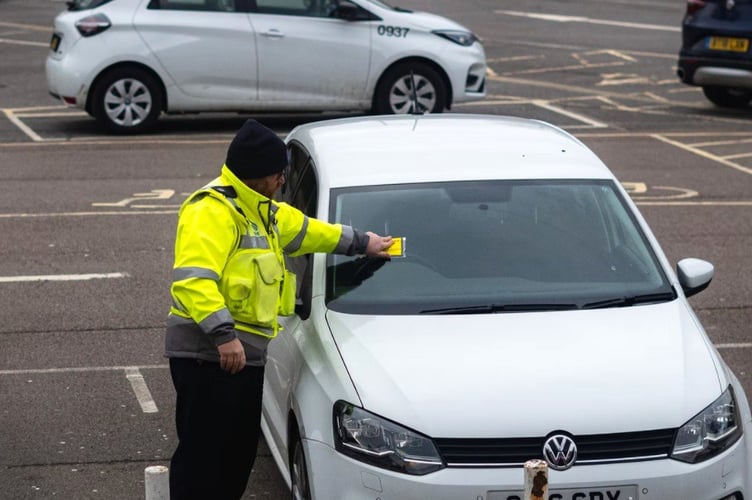
MORE than £23 million is to be spent by Somerset Council to catch motorists who stay too long in a car parking bay or stop on yellow lines.
That is the cost of a new, eight-year contract between the council and NSL, part of Marston Holdings, a leading provider of parking enforcement services.
An existing contract expired at the end of June, and the new deal was agreed to ‘prevent disruption’ and allow traffic wardens to continue taking action against ‘errant motorists’.
The council confirmed the deal will cost an average of about £3 million a year and will meet its legal duty to manage car parking and traffic across Somerset.
The price represents an increase of about £370,000 due to ‘wider market and operating cost pressures’.
The authority said the expenditure would be offset through increased income both from parking fines, known as PCNs, and pay and display car park charges.
The payments will be subject to ‘satisfactory performance and affordability’ on top of any changes in inflation.
Council parking services manager Vicky Lowman said: “Parking enforcement plays a critical role in managing the highway network, supporting turnover of parking spaces, maintaining access, improving road safety, and ensuring that controls are applied fairly and consistently.
“We must deliver this within a challenging environment, including budget pressures, recruitment constraints, training requirements, technology demands, and increasing customer expectations.”
Ms Lowman said taking the service back in-house had been considered but was felt to be ‘too complex and resource-intensive’ with ‘significant set-up costs’.


She said: “Continuing with the existing provider enables retention of an established operating model, experienced workforce, supporting systems, and local knowledge.
“This approach also avoids TUPE implications and reduces mobilisation risk.
“Awarding this contract provides a stable and scalable service, reduces operational risk, and enables a stronger focus on performance, compliance, customer service, and continuous improvement.”
Comments
This article has no comments yet. Be the first to leave a comment.