
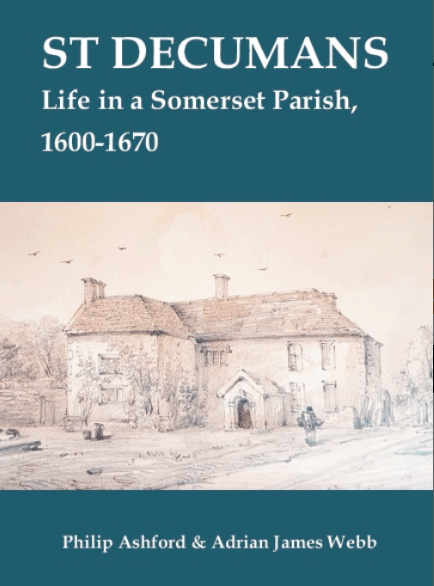
AN exciting and major local history study has recently been published in hardback book format focusing on the dramatic period 1600 to 1670 in West Somerset from Porlock to West Quantoxhead and as far south as Wiveliscombe.
It entirely covers the parish of St Decuman’s, which is Watchet, Williton, Doniford, and Stream, with its myriad social, economic, trade, and military connections across West Somerset and beyond.
‘St Decumans, 1600-1670: Life in a Somerset Parish’ is co-authored by Philip Ashford and Dr Adrian Webb andexamines the ordinary and extraordinary.
The ‘ordinary’ life of St Decuman’s farmers, clothiers, mariners, lime burners, masons, and breastfeeding mothers are analysed, for example.
This is juxtaposed to ‘extraordinary’ events beyond the control of local people, sudden deaths, badly behaved neighbours, including those with mental health problems, the freezing winter of 1608 and its effects, the damage to Watchet Harbour in the 1620s, the Irish rebellion of 1641 and the passage of destitute Protestants passing through Williton having arrived back in Minehead, locals who marched off to serve the King in the Civil War and did not return, as well as those who did, the Watchet plague of 1646, as well as changes in the church are some of the themes covered.
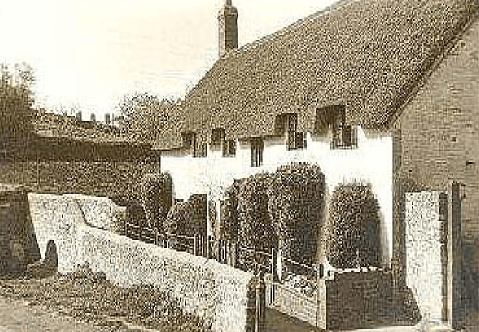
At the same time, the enormous influence of the port of Watchet on the local economy and its varied regional, national, and international links is explored, as well as the stabilising influence of Sir John Wyndham, of Orchard Wyndham.
Both legal and illegal trades and irregularities are investigated.
It is a fully referenced academic book linked to the thousands of original documents upon which it is based.



The amazing resource is an ‘essential’ for anybody living locally or nationally who is interested in the history of West Somerset as well as for students of the 17th century.
The vast range of unusual documentation consulted means that the book is significantly different to most local histories, as well as shedding light on so far unknown events of local as well as national importance.
One reason why historians have called the book ‘groundbreaking’ and rather than ‘opening a window’ on St Decuman’s between 1600 and 1670 is, a ‘great door’ has been pushed aside with the discovery in Sussex of a continual series of constables’ accounts for Williton from 1615 to 1705.
Constables’ accounts are rare for Somerset as well as in the country as a whole, and an unbroken series is almost unheard of nationally.
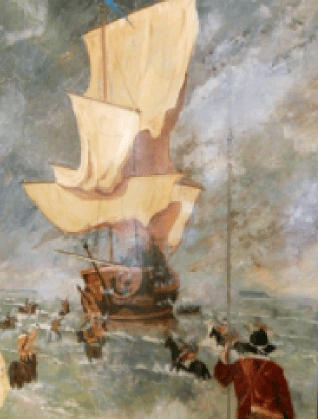
Thus, the authors have been able to investigate the activities of the militia, local malefactors, the passage of soldiers and refugees through Williton, as well as the effects of the Civil Wars and religious suppression on local individuals.
Some of the enormous number of discoveries which are developed in considerable detail in the volume include:
- Cattle colouration, ear-markings, purchases, sales and prices at fairs in Watchet, Wootton Courtenay, Dunster, Dulverton, and further afield
- Sudden deaths and consequent inquests of children and adults who died in and around Watchet
- The Watchet families who were most affected by plague in 1646 and some of their family trees
- Assaults and affrays in and around the inns and alehouses and the notable hot-headed people involved as well as the relationship between unlicensed alehouses and these events
- The care of individuals who by dint of age, infirmity, or calamities beyond their control needed financial support from the overseers of the poor
- The running of the Wyndham estate and the work of the estate steward John Byinman
- The maintenance of the chapel at Williton and it ‘poorhouse’ and the organisation and income from ‘church ales’
- Analysis of many of the trades and businesses which ran in the parish, including the cloth industry, lime burning, ship owning and maritime trade, blacksmithing, mason, and, of course, farming
Readers interested in finding out more about the St Decuman’s book or a transcription of the constables accounts, or purchasing copies, can find information at https://somersethistory.com by scrolling through the books available, or byattending Watchet Maritime History Day on Saturday, October 3.
Watchet Maritime History Day 2026
Rarely have such noted expert and interesting researchers, authors and lecturers been gathered in one place in West Somerset to present historical topics relating to Somerset maritime trade, industry, mercantile activity - legal and illegal - as well as a deep dive into Watchet affairs between 1590 and 1665.
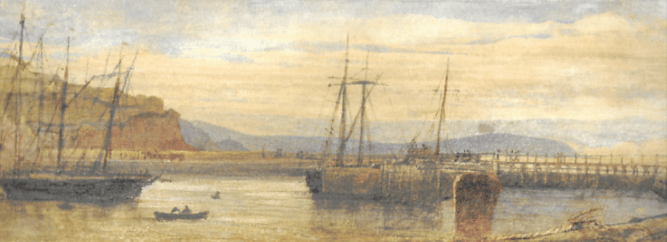
The presentations will, in total, cover material relating to the past 500 years and will be held in Watchet on October 3 from 10 am to 4 pm in the Salvation Army Hall.
This exciting and informative history day, presenting both known and much new material, organised by the South West Maritime History Society and other organisations, starts with a presentation from Dr Evan Jones ,of Bristol University, who will talk on ‘Maritime Lawlessness in the Severn Sea’, a topic which should appeal to all those who wish they could avoid rules and taxes.
Details of other topics, including railway history in Watchet, financially-challenged Minehead merchants, lime kilns and lime burning along the Somerset coast, and the marine artist Thomas Chidgey, are to be found at https://www.swmaritime.org.uk/product/watchet-history-day-2, where remaining tickets can also be purchased.
As a bonus, following West Somerset historian Philip Ashford’s talk on ‘Life in the maritime hub of Watchet 1590-1665’, there will be the official launch of his and Dr Adrian Webb’s new volume ‘St Decumans, 1600-1670: Life in a Somerset Parish’.
Comments
This article has no comments yet. Be the first to leave a comment.