
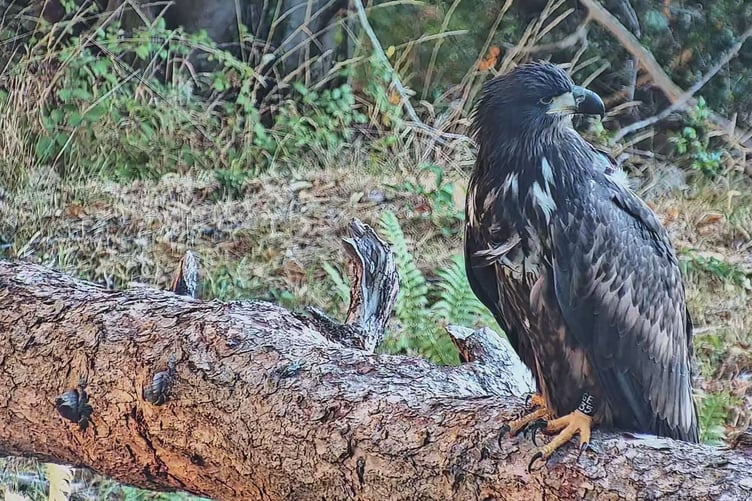
A REPORTING system has been set up for farmers and gamekeepers on Exmoor following the controversial reintroduction of white-tailed eagles earlier this month.
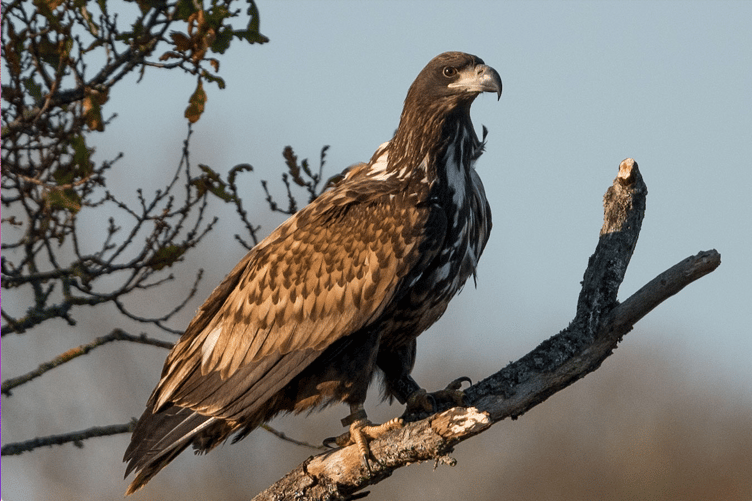
Six young birds, also known as sea eagles, were secretly released on Exmoor, 200 years after they were hunted to extinction on the moors.
Reintroducing lost species to the national park such as pine martens, red squirrels, and sea eagles is popular with the public.
But farmers and others who fear their animals and poultry may fall prey to the eagles have been fiercely against the plans.
Now, Exmoor National Park Authority (ENPA) and the Roy Dennis Wildlife Foundation, which has pioneered the re-establishment of white-tailed eagles in southern Britain, are promoting a reporting system to be used if there are incidents where livestock is thought to have been predated by the birds.
Full monitoring and rapid‑response systems have been put in place through satellite tracking and engagement teams.
Each incident will be investigated and advice and practical support offered where possible, and further action considered which could even include recapturing the birds.
ENPA chief executive Sarah Bryan said every eagle was fitted with a satellite tag and the team will closely monitor them and share information about their progress.
Ms Bryan said a steering group had been established, including representatives of environmental, community, farming, and shooting organisations with an independent chairman.


.png?width=209&height=140&crop=209:145,smart&quality=75)
Farmers, game managers, and landowners were central partners in how the project developed on Exmoor.
Ms Bryan said no livestock conflicts had been reported in England to date and the eagles’ natural diet heavily favoured fish, carrion, and small mammals.
White‑tailed eagles naturally favoured fish such as mullet and bass, a preference which increased with age.
They also took small mammals and carrion and some birds, including corvids, ducks, and Canada geese.
Ms Bryan said 14 satellite‑tracked white-tailed eagles had been visiting the national park for a number of years, spending extended periods of time around farmland without any incidents involving livestock.
She said public consultation had seen some concerns raised that the eagles might predate lambs or other livestock.
Ms Bryan said: “We have been careful to listen to these concerns, to look at the scientific research around this issue.
”The project team began reintroducing white-tailed eagles in 2019.
“Since that time, they have been closely monitoring and observing their diet.
“This evidence demonstrates how in southern England there is an abundance of the birds’ favoured food of fish, small mammals, and birds.
“There have been no reported conflicts with farming livestock or pets since the project began seven years ago.
“Any incident reported in the west of Scotland does not reflect experiences in England and is being viewed as predominantly due to lack of alternative wild prey in some biologically poor regions.”
Up to 20 more young sea eagles are due to be released on Exmoor over the next three years with releases carried out gradually, based on a bird’s readiness to fledge.
Concerns can be raised with the project team by emailing [email protected].
Comments
This article has no comments yet. Be the first to leave a comment.