

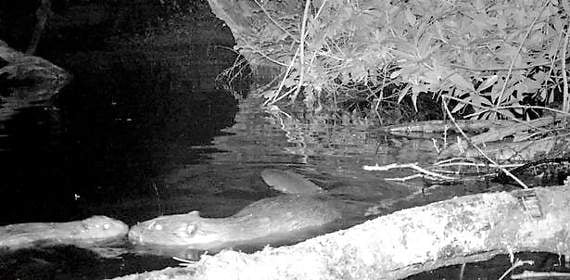
THE first baby beaver to be born on Exmoor for 400 years was this week captured on film at their enclosure on the Holnicote estate – and mother and baby appear to be thriving, a National Trust spokesman said.
Beavers were introduced at Holnicote in January 2020 as part of a return to Britain after being hunted to extinction for their fur, glands and meat in the 16th century.
They are seen as nature’s engineers who restore wetland habitats through dam-building and felling trees, slowing, storing and filtering water in the landscape, which attracts other wildlife and reduces flooding downstream.
The trust said the 2.7 hectare (6.7 acre) beaver enclosure has been transformed from unmanaged woodland to a more open wetland attracting more wildlife, in just 18 months.
-Chloe-Hadjimatheou-Rachel-Jo.jpeg?width=209&height=140&crop=209:145,smart&quality=75)

Now footage shows the beavers have successfully bred, revealing the six-week-old kit swimming with its mother back to the family lodge while she stops to nibble a branch.
Jack Siviter, a ranger on the Holnicote estate, said: “We first had an inkling that our pair of beavers had mated successfully when the male started being a lot more active building and dragging wood and vegetation around the site in late spring.
“The female also changed her usual habits, and stayed out of sight, leaving the male to work alone.
“We are particularly pleased for our female, nicknamed Grylls due to her survival instincts, as she didn’t have the easiest start to life, being orphaned at an early age.
“As a first-time mum she seems to be thriving and it’s great to see her with her new kit.”
The family should now stay together for the next two years before the kit will leave to create a new territory of its own – when it will be relocated into another enclosure or a wild release site if regulations permit in the near future.
The trust said the beavers had transformed the habitat on the Holnicote estate, building a dam network from trees, mud, stones and vegetation which has created ponds and new channels, and felling some trees, which has allowed more light to the woodland floor.
The new wet woodland habitat they have created is now a more diverse habitat, attracting wildlife from bats to dragonflies, kingfishers and sparrowhawks, while otters are now more regular visitors to the site, the trust said.
Ben Eardley, project manager for the National Trust at Holnicote, said: “The beavers are doing a lot of what we want to see in terms of conservation and land management.
“They are letting the light and the water into the site, helping natural processes and providing opportunities for a host of other wildlife.”
Comments
This article has no comments yet. Be the first to leave a comment.