
A CONVICTED serial sex offender caused the death of a woman in his Minehead flat by coercing her into taking an overdose of sleeping tablets, a coroner has ruled.
Senior Somerset Coroner Samantha Marsh on Wednesday (July 8) concluded an inquest into the death of Kelly Faiers, aged 61, who was in a relationship with Richard Scatchard.
Mrs Marsh said Ms Faiers was ‘unlawfully killed’ because Scatchard made her take an excessive quantity of sleeping tablets so he could ‘have his way with her’ while she was unconscious.
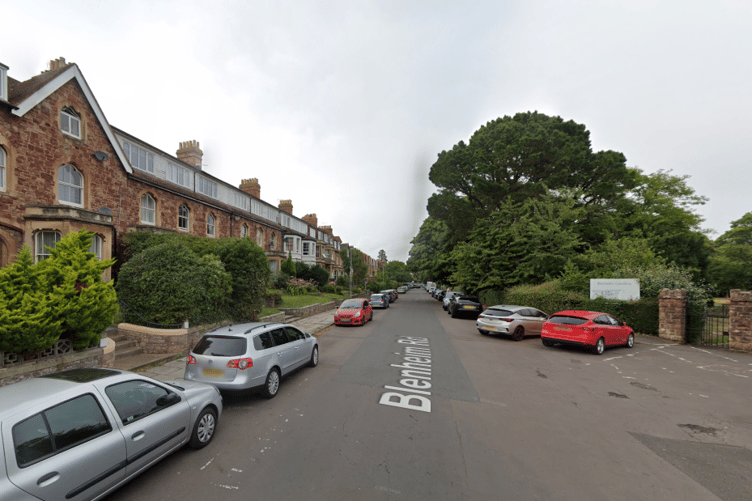
However, she had earlier also drunk five large glasses of wine and a vodka, and she died on the floor of Scatchard’s flat in Blenheim Road in the early hours of Sunday, October 15, 2023.
Scatchard, who used the false name ‘Dunlop’ to date Ms Faiers, a mother of four from Weston super Mare, was on licence after his release from a life prison sentence.
A day after the death of Ms Faiers it was decided to recall Scatchard to prison but he went on the run before police officers went back to his flat and was found dead six months later in a caravan near Watchet.
Mrs Marsh was due to open inquest proceedings on Thursday (July 9) into Scatchard’s death which were expected to run util Monday.

PC Alexandria Harris and Kate Fortune gave evidence that they were called to the flat by paramedics and were aware from a ‘flag’ on the address that Scatchard was an offender on licence.




They wanted to arrest Scatchard but were told by a duty CID sergeant not to do so but instead to take a full statement from him.
The officers became uneasy after searching the internet on their mobile phones and discovering the nature of Scatchard’s crimes.
PC Harris said she was ‘confused, angry, frustrated, and in shock’ and later regretted not arresting Scatchard despite the advice of the sergeant who did not consider there were any suspicious circumstances.
Sgt Lauren Whitehouse also arrived at the flat and despite her concerns she was told any arrest would have to wait until the results of a post-mortem examination on Ms Faiers.
The inquest heard there was no evidence to suggest Ms Faiers was aware of Scatchard’s convictions, which included kidnap, rape or attempted rape, and numerous offences of drugging women and sexually assaulting them while they were unconscious.
Mrs Marsh described Scatchard as ‘controlling and coercive’ and she heard when Ms Faiers tried to end the relationship she was bombarded with 475 WhatsApp messages and texts across four days.
Scatchard sent messages about his desire to see her ‘lying there naked, falling unconscious’, to which Ms Faiers replied: “I don’t particularly like that, I hate loss of control!!!”
Paramedics called to Scatchard’s flat were unable to revive Ms Faiers and she was declared dead at the scene.
Scatchard told paramedics Ms Faiers went to sleep on the floor of his lounge and he discovered her unresponsive when he awoke to use the toilet.
He said she took about 10 sleeping pills and consumed a large quantity of alcohol, including vodka, and he caused heightened suspicion by the paramedics by telling them unprompted that he did not have sex with Ms Faiers that evening.
A toxicology report showed that Ms Faiers had consumed nearly three times the drink-drive limit of alcohol, but Mrs Marsh said Ms Faiers was a ‘high functioning alcoholic’ and there was no evidence she was ‘drunk’, though clearly intoxicated.
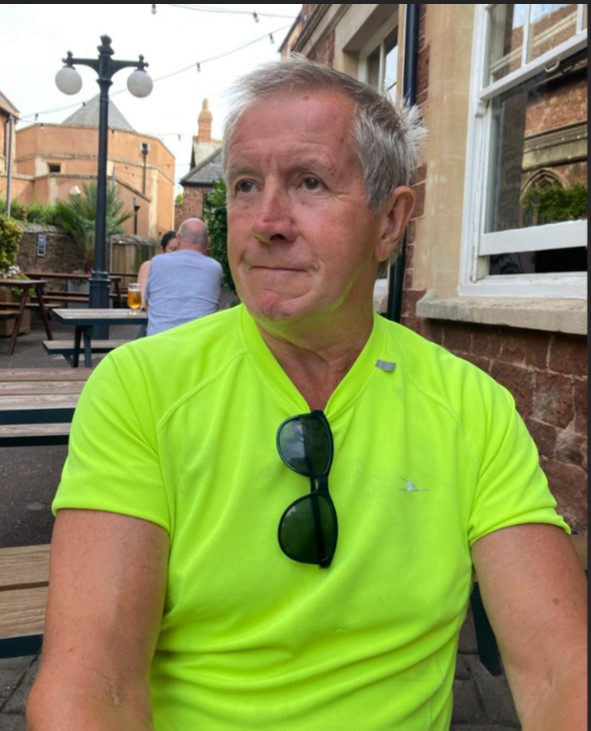
Mrs Marsh accepted a Home Office pathologist’s evidence that death resulted from a combination of alcohol intoxication and diphenhydramine, an antihistamine sometimes used as an over the counter sleeping aid.
She ruled that while neither the alcohol nor the sleeping pills in isolation were likely to have resulted in death, the combination ‘working in tandem’ proved fatal.
There was no evidence Ms Faiers usually took sleeping tablets in such quantity and the coroner concluded the medication found in her body had belonged to Scatchard.
Mrs Marsh concluded it was a ‘reasonable inference’ that Scatchard coerced Ms Faiers into taking the high dose and that her actions on the day of her death appeared to have come about ‘solely as a result of Richard Scatchard’s coercive behaviour’.
Scatchard’s history of convictions revealed a pattern of behaviour of drugging women and then sexually assaulting them while they were unconscious, photographing and videoing the acts.
Although Ms Faiers was discovered with her trousers and underwear lowered below her hips, it could not be determined how that happened.
At the time of Ms Faiers’s death, Scatchard’s licence required him to disclose any romantic relationships to the probation service for safeguarding reasons.
However, he kept the relationship with Ms Faiers secret and the probation service did not become aware of her existence until after she had died.
Mrs Marsh said the nature of the relationship was ‘tragic’.
She said Ms Faiers was lonely and that she ultimately preferred ‘a man who was essentially horrible to her, than being alone’.
Mrs Marsh said Ms Faiers did not tell her children about Scatchard because she knew they would not like him, but had she done so, they would have had an opportunity to provide further safeguarding, and potentially discover his true identity as a convicted rapist.
She said: “I am not blaming Kelly for one minute, it is not her fault, she did not have a part in her death.
“But I cannot ignore that concealment by both parties meant those who loved her did not have the opportunity to help her, or to spot the obvious red flags everybody around Kelly, especially her colleagues, saw.”
Mrs Marsh in her conclusion said: “I do not believe her death intended to be the result, he intended to stupefy and incapacitate her so he could have his way with her.
“Whether or not he performed an act of sexual nature cannot be determined on the evidence, but that is not something this court is required to grapple with or determine.”
Comments
We've recently changed our login process. If you have an account for commenting, you will need to re-register on the login window.
This article has no comments yet. Be the first to leave a comment.