

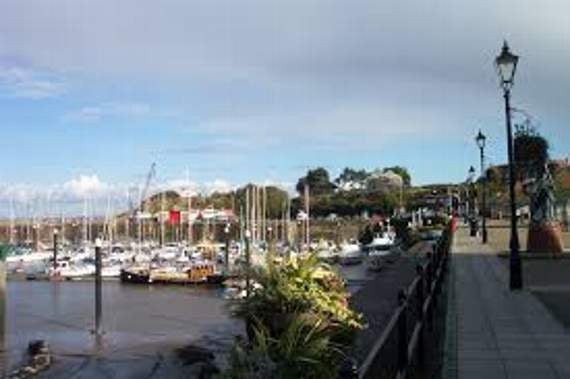
A NEW pressure group is calling for action to be taken to tackle Watchet harbour’s mud problem which they claim is “unsightly and dangerous, and bringing shame on the town”.
At a meeting last Friday (April 27), the Watchet Silt and Mud Group was told that a possible solution to the problem had been developed by the group’s experts and was ready to be tested.
But during discussions with West Somerset Council and the Watchet Harbour Advisory Committee, confusion over whether the tests needed a licence had delayed the project for months.
The group, which was started in January and has 78 members, claims that West Somerset Council “has lost its way” when it comes to efficiently managing Watchet harbour.

.jpeg?width=209&height=140&crop=209:145,smart&quality=75)

Group chairman and founder Bryan Mitchell said there was anger that the council seemed to be stalling on allowing the demonstration, which would take place in the outer harbour
“We have come up against a lot of resistance and lack of good will, which is very frustrating when all we want to do is to organise a demonstration of the system so that everyone can see if it works or not,” Mr Mitchell said.
“Everything that has been tried so far has had no permanent effect. It’s no exaggeration to say that not in 1,000 years has tidal silt and mud so threatened the town’s commercial future.
“You only have to visit The Esplanade at low tide to realise that Watchet has an obvious problem which is not going to disappear without intervention, but for the sake of the town absolutely must be addressed.
“The marina operators appear to have made concerted efforts to remove the sediment over the years using a dredger which unfortunately have proved ineffective.”
Last month, West Somerset Council and Watchet Harbour Marina spent £30,000 on a two-week trial of a water-injection dredger hired from Cardiff. The results are still being assessed.
The marina company’s main dredger has been out of action with mechanical problems since August.
The mud group’s suggested solution, developed by retired underwater engineer Kevin Wheeler, involves the use of air-lift technology which sends compressed air down tubes to liquify the mud and allow it to leave the harbour on the ebb-tide.
The system is claimed to be cheaper and more efficient than dredging and has been used widely in other harbours and in the off-shore industry.