
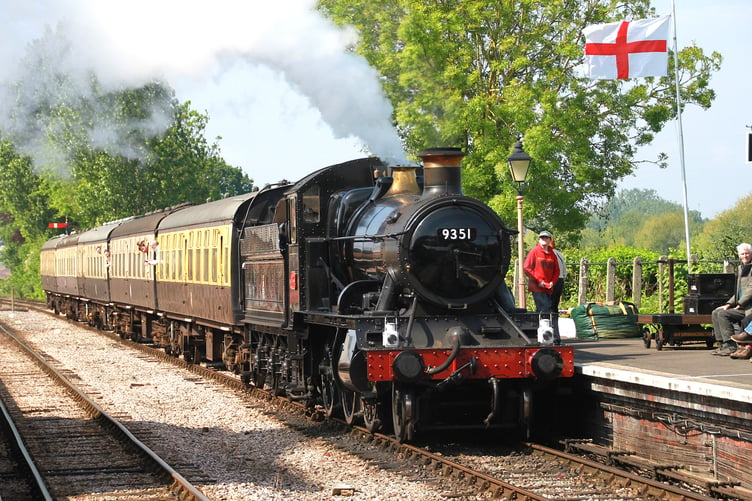
THE extent of financial challenges facing the West Somerset Railway (WSR) in its 50th anniversary year has been laid out in the company’s annual accounts, the last to be written by chairman Jonathan Jones-Pratt before his death earlier this month.
The WSR is England’s longest steam railway and the UK’s longest standard-gauge heritage railway, and holds a lease until 2088 on its 20-mile line from Minehead to Bishops Lydeard, plus the track through to Norton Fitzwarren.
Mr Jones-Pratt said: “We have every reason to be proud of what has been achieved.
“Our programme of special events this year has been among the finest offered by any heritage railway in the country.
“Without the external economic pressures we have experienced, these events would have generated even stronger growth in passenger revenues.
“With the important summer and Christmas trading periods still ahead, I remain optimistic about our prospects for the remainder of the season.”
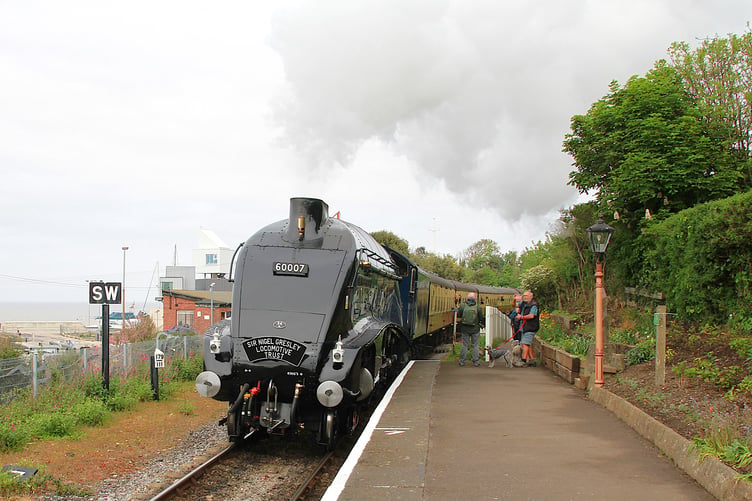
However, Mr Jones-Pratt said regular fares failed to show any growth from the previous year and even with the success of visits by the Flying Scotsman and the Sir Nigel Gresley, they struggled to keep up with the board’s forecast of a small increase.
Trading losses for the year ended March 31, 2026, were £228,704, which equated to a little over £19,000 per month.
Mr Jones-Pratt said financial forecasts indicated the WSR needed to see annual revenue growth of at least five per cent if it was to remain ‘financially resilient’.
He said it was ‘undoubtedly, an ambitious target’, but he believed it was ‘entirely achievable’ if the wider economy remained reasonably stable.
 Profound shock and deep sadness as tribute paid to late heritage railway chairman
 West Somerset Railway at crossroads as chairman dies after turning company around
 Flat ticket sales despite Flying Scotsman sees West Somerset Railway losses soar
 Details of car thefts investigation given after police accused of 'lack of interest'
Mr Jones-Pratt said: “Rising fuel costs and broader economic uncertainty will continue to present challenges, but we have already demonstrated our ability to adapt and respond effectively when circumstances demand it.”
He said there was much to inspire confidence in the future of the WSR, including plans for a new visitor centre and covered canopy at Bishops Lydeard.
Other capital projects which were being funded by the West Somerset Railway Association and the West Somerset Railway Heritage Trust had potential to transform the visitor offer and strengthen long-term financial sustainability.
Mr Jones-Pratt said: “The continued generosity of supporters through donations and legacies remains essential in enabling these projects to proceed and ensuring we are well-placed to serve future generations over the next 50 years.
“The WSR has reached an important milestone in its history.
“While the challenges before us are significant, so, too, are the opportunities.
“By continuing to work together, shareholders, volunteers, staff, supporters, and our partner organisations, I am confident we can build on the achievements of the past 50 years and secure a successful and sustainable future for the railway.”
However, Mr Jones-Pratt said the WSR faced a significant challenge with a ‘substantial programme of carriage restoration required’ in the coming years, which was particularly important in supporting the increasingly successful dining trains, one of the railway’s most valuable sources of income.
Financial resilience was being strengthened through commercial partnerships, charter operations, filming, and other opportunities.
Comments
We've recently changed our login process. If you have an account for commenting, you will need to re-register on the login window.
This article has no comments yet. Be the first to leave a comment.