
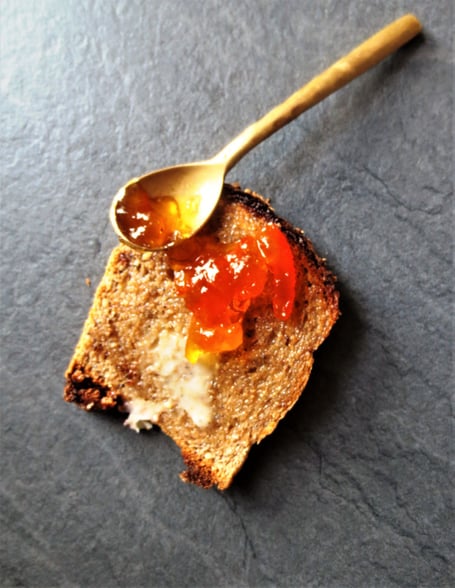
IT’S your last chance to make marmalade while the Seville oranges are still in good shape, and I’ve had a kitchen smelling like an orange grove for 24 hours.
And then, potted up, you’ve got jars of warm pellucid brightness - Seville orange marmalade. And then you can spend the rest of the year being unbearably smug, perhaps handing jars out to people - ’it’s probably awful, yes, I made it, not sure what it tastes like, I didn’t bother measuringâ¦" - We are a violently humble people.
And we don’t do it like the French. My French friend Monique throws beetroot at me in the street. There is no preamble at all. And because it’s straight from her allotment, there is a fair amount of home-made compost attached.
She unearths atrocious-looking, gorgeous-tasting stuff and shares it with a Gallic shrug, as if to say: "What am I going to do with all this incessant greenery?"
-Chloe-Hadjimatheou-Rachel-Jo.jpeg?width=209&height=140&crop=209:145,smart&quality=75)



There are no strings attached to her generosity. And because English is not her first language, there is no hidden meaning - very different from here, where you tend to be demolished slowly and gently by stealthâ¦
The clue is no questions. No interest in who you are or what you’re doing, as if your being interesting is somehow a threat. It must be something to do with us being islanders, being victors and colonisers. We are guilty and proud and a bit defensive at the same time.
All of this comes out in our marmalade, by the way: that bitter candy and burnt orange aroma, taut, thick rind against umber jelly, the sticky tributaries of syrup, the brightness in winter, the selfless preserving. We put it all in there. That’s possibly why our English home-made marmalade is such a complex preserve. Because we are.
Seville Orange Marmalade
Adapted from Delia Smith, Complete Cookery Course
It’s lovely on its own on a piece of toast, an oatcake, anything, or dropped into some cake batter - gingerbread is a natural bedfellow as is anything chocolate.
And in case you are put off by the intricacies of making your own marmalade, just so you know there are no intricacies: I have been making very good marmalade for years with nothing but a big saucepan and a clean handkerchief - for the pips and pith. It’s a bit long-winded, that’s all, but always worth it.
What you need:
2lb (900g) Seville oranges, 1 lemon, 4 pints (2.25 litres) water, 4lb (1.8kg) granulated sugar (you could make some of this light muscovado)
Six 1lb (450g) jars, a square of gauze/muslin or a clean handkerchief or a new pair of tan tights/stockings, string and a saucer.
What you do:
Begin by squeezing the juice from the oranges and the lemon into the pan you’ll be using. Remove all the pith and pips as you go and place them on a square of muslin laid over a bowl; the pips and pith contain the pectin which will enable your marmalade to set.
Now cut the peel into shreds and add it to the juice - as fine or as thick as you like, but the thicker it is, the longer it will take to soften. When you’re done, add the water to the juice and peel, tie up the muslin to form a small bag - make sure nothing will escape - and add that too. Leave in a cool place overnight.
The next day, tie the muslin bag to the handle so that it bobs like a cork in the liquid - but doesn’t touch the bottom. Now is the time to put a saucer in the freezer so you can begin testing later. Bring the liquid gently to the boil and then lower the heat and simmer.
It is ready when the peel is completely soft - you can test a piece by pressing it between your finger and thumb. This can take anything from 35 minutes to an hour and a half; be aware that once sugar meets rind, it will no longer soften.
When the peel is ready, lift out the muslin bag and leave it on a plate until it’s cool enough to handle. Pour the sugar into the pan and stir over a very low heat until it has dissolved. You may want to hold back on the full amount of sugar and go for a slightly tarter taste.
When there are no crystals left, increase the heat and bring the marmalade to a rolling boil. Now squeeze every last bit of the jelly-like pectin that oozes from the muslin bag into the pan. Every little helps here, so be vigilant.
Skim off any froth or scum that comes to the surface and leave the marmalade at a fast boil for 15 minutes. Now put a tablespoon of it on one of the cold saucers and let it cool in the fridge. If when you push the marmalade with your finger the mixture crinkles like a furrowed brow, then you have a ’set’.
Keep testing at 10 minute intervals until it has reached setting consistency. The mixture will start to look more amber and treacly - there is a trick here which is to watch as droplets of the marmalade leave a spoon.
When it’s ready, there will be one single droplet; one of the myriad ways of knowing it’s set. Leave the marmalade to settle for about 20 minutes otherwise all the peel will float to the top of the jar.
Wash and dry your jars and warm them in a moderate oven - this will sterilize them. Ladle the marmalade into the jars and seal immediately. Label when completely cold.
* Read more of Sophie’s culinary adventures on storiesfromthestove.net
Sophie James
Comments
This article has no comments yet. Be the first to leave a comment.