
DULVERTON residents were challenged to switch off their lights on Wednesday as part of a live BBC television event.
The town was chosen to feature on the last night of the three day BBC Two Stargazing Live extravagansa.
As the church bells rang out across the village, residents were encouraged to plunge the town into darkness to give people the chance to take in the wonders of the night sky, free of the effects of light pollution.
Unfortunately, Mother Nature had other ideas and clouds and rain largely obscured what should have been a spectacular astral display.
-Chloe-Hadjimatheou-Rachel-Jo.jpeg?width=209&height=140&crop=209:145,smart&quality=75)
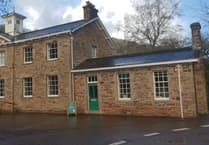
Nevertheless, townsfolk were determined not to let the weather dampen the party atmosphere as they helped BBC presenter Mark Thompson and local astronomers mark the occasion.
Mr Thompson said the point of the event had been to show that even a small town like Dulverton could give off a lot of light.
In November, Exmoor was granted International Dark Sky Reserve status - the first area in Europe to achieve the accolade.
Claire O'Connor, from Exmoor National Park Authority, said everyone in the town of all ages had got involved with the Stargazing event.
"Even the cake shop made the planet Saturn, complete with rings, in cake form.
"We want people to just enjoy the night sky. You don't need special equipment, if you have a decent pair of binoculars that's all you need on Exmoor."
But despite the clouds, residents were still able to enjoy a wonderful starry night thanks to a full-size planetarium - the aptly-named Space Odyssey Dome.
Earlier in the week, the dome was set up in Dunster Tithe Barn and used cutting-edge graphics and advanced computer simulations to create an interactive night-sky experience.
Visitors were able to enjoy a presentation, displays and take part in hands on-activities with the help of Tiverton Astronomy Society and other local astronomers.
Thankfully, the clouds weren't quite so thick in Dunster and star-gazers were able to catch a glimpse of the real thing.
Local resident Si White, who took along his young son Charlie, said: "We found that just a simple pair of binoculars was enough to see Jupiter and three of its many moons but the biggest advantage by far was the lack of light pollution on Exmoor.
"This meant that we could see so much more than elsewhere, just with the naked eye and with no special equipment required."
Photos: Steve Guscott
Comments
This article has no comments yet. Be the first to leave a comment.