
WEST Somerset Railway - one of the district's major tourist attractions - is managing to survive a nationwide coal shortage threatening heritage steam train lines across the country.
Some of the 200 or so heritage lines in the UK are struggling to secure supplies after a fire at the Daw Mill Colliery in Warwickshire in February and the collapse of Scottish Coal last month reduced production.
But WSR general manager Paul Conibeare said the 20-mile Minehead to Bishops Lydeard line, which last year carried around 200,000 passengers, was unaffected at the moment.
"We are keeping our fingers crossed but it is a worry," he told the Free Press.
 West Somerset Railway London Marathon runners help to fund steam engine restoration
 Somerset councillors warned to take control of spending before next year's elections
 Three kilometre spring wildlife walks will support Somerset space for hedgehogs
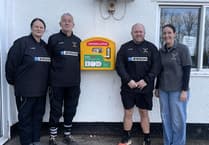 Old community defibrillator replaced by Minehead Barbarians Rugby Club
For the past year the WSR has bought the 1,700 tons of specific lumped coal it needs to fuel its fleet of locomotives from South Wales.
"As we are an existing customer, they have told us they will continue to supply us for the foreseeable future but we know they are not taking on any new customers," said Mr Conibeare.
"As one of the longest heritage lines in Britain, we need about a lorry load a week and at £185 a ton, coal isn't cheap."
In the past, the WSR has sourced coal from diverse locations ranging from Scotland to Columbia.
Before the recent South Wales deal, it was using coal shipped in from Russia.
But Mr Conibeare said using Russian coal again would put an additional £47,000 on the current £300,000 annual bill, which the WSR would "struggle to absorb".
The possible crisis was discussed at a recent meeting of heritage line chiefs in North Wales, which Mr Conibeare attended.
"We all struggled with the weather last year and we all agreed that the last thing we need this year is a coal shortage," he said.
"We are a luxury - people don't have to travel with us and we realise that families are struggling at the moment, which is why we have kept our tickets at last year's prices.
"But at the same time, we are good for the local economy."
Mr Conibeare said the WSR had carried 3,400 passengers over the bank holiday weekend - eight per cent up on last year's numbers.
"That's all good news for local shops and businesses because it's bringing people into the town.
"We know we could always run more diesel trains but a lot of people come here to see the beautiful West Somerset countryside by steam train - that's the attraction."
UK Coal said it was still producing 'steam grade' fuel at its mine in Kellingley in Yorkshire but that the unavoidable closure of Daw Mill had had an impact on its overall production.
Last year the colliery produced around two million tons of coal, about 95 per cent of which went to power stations.
But house coal and that used by power stations is often unsuitable for locomotives which require large-grade fuel with a very high burning temperature.
Mr Conibeare said: "At the moment the situation is not affecting the WSR but we are certainly keeping our fingers crossed."
Comments
This article has no comments yet. Be the first to leave a comment.