
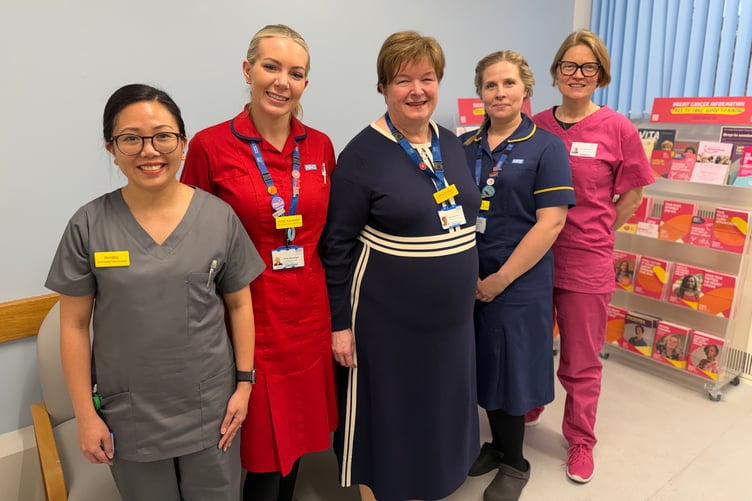
A NEW self-referral pathway for people with symptoms of breast cancer is giving patients in Somerset faster access to specialist care, while reducing pressure on GP services.
Since its launch in January last year, 866 people have self-referred directly to Somerset NHS Foundation Trust’s breast diagnostic clinic, without the need for a GP appointment.
Of those, 48 have been diagnosed with cancer, with 34 progressing on to treatment, and 727 being identified as non-cancerous, demonstrating the strength of the clinically-led digital triage in directing higher-risk patients into urgent specialist care, and reassuring those at lower risk.
The trust was the first in England to introduce the pathway, which is accessed via NHS 111 online and the NHS App.

.jpeg?width=209&height=140&crop=209:145,smart&quality=75)


It allows eligible patients with worrying symptoms, such as a breast lump, to be referred straight to a diagnostic clinic, speeding up cancer diagnosis and freeing up valuable GP appointments.
It is also in line with the recently published NHS 10 Year Plan, which focuses on earlier diagnosis and prevention.
Trust cancer programme manager Rosie Edgerley said: “The introduction of the self-referral system is a significant step forward in supporting people with breast symptoms.
“By enabling patients to by-pass their GP and be referred directly for specialist assessment, we are helping them to be seen more quickly during what can be an anxious and worrying time.”
Consultant breast surgeon Caroline Osborne said: “For most people referred, we will be able to reassure them that their symptoms are not related to breast cancer.
“There will, sadly, be some people who do have breast cancer, and for them, the 111 online referral route could result in an earlier diagnosis, which is something we always strive for.
“We know when a breast cancer is diagnosed early, it gives us the best opportunity for successful treatment of the disease.”
Senior product manager at 111 online Shaida Tanweer said: “This is about using technology to make access simpler and safer.
“Patients get faster reassurance or diagnosis, while the NHS benefits from a more efficient pathway.
“It shows how digital-first services can deliver real change in cancer care.”
One in seven women in the UK develop breast cancer during their lifetime, and it is more common in older women.
Several factors influence somebody’s risk of breast cancer, including their age, weight, and family history.
Some environmental factors such as alcohol consumption and smoking add to the risk of breast cancer.
Breast lumps are common and can be caused by other harmless conditions, and having some symptoms does not definitely mean a person has breast cancer.
Symptoms can include:
• A lump, or swelling in the breast, chest, or armpit
• A change in the skin of the breast, such as dimpling or redness
• A change in size or shape of one or both breasts
• Nipple discharge when not pregnant or breastfeeding, which may have blood in it
• A change in the shape or look of the nipple, such as it turning inwards or a rash on it
Comments
This article has no comments yet. Be the first to leave a comment.