
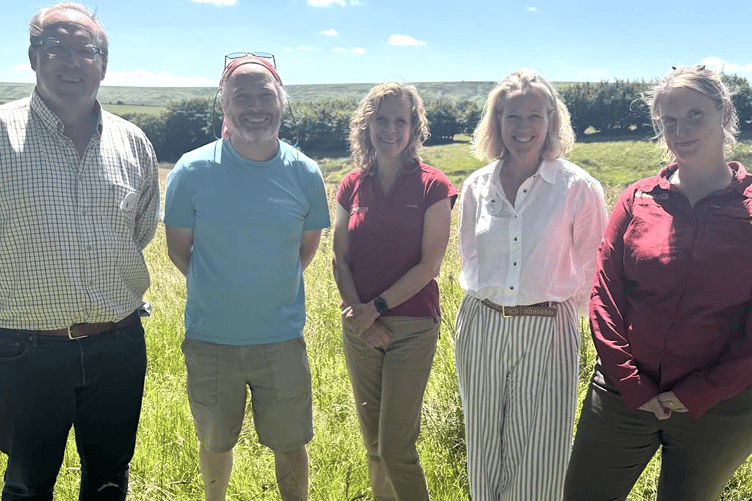
THE work of an Exmoor-based environmentalist is inspiring a major drive to create and restore species-rich wildflower meadows across the moor.
Donations made in memory of Mark Burges Watson, always known as ‘Burge’, the late founder of the Burge’s Meadows wildflower campaign, are supporting meadows restoration, including harvesting and distributing local wildflower seed, and conducting botanical and soil surveys.
Mr Watson, who died of cancer earlier this year at the age of 57, launched Burge’s Meadows with the aim of planting 1,000 acres of wildflower meadows across England and Wales by 2035.
In a statement, the charity said how fitting it was that contributions in Mr Watson’s name would help restore the very landscapes he cherished.
A spokesperson said: “Aptly, we signed our first commitment letter to create new meadows on Exmoor a few days before Burge died.
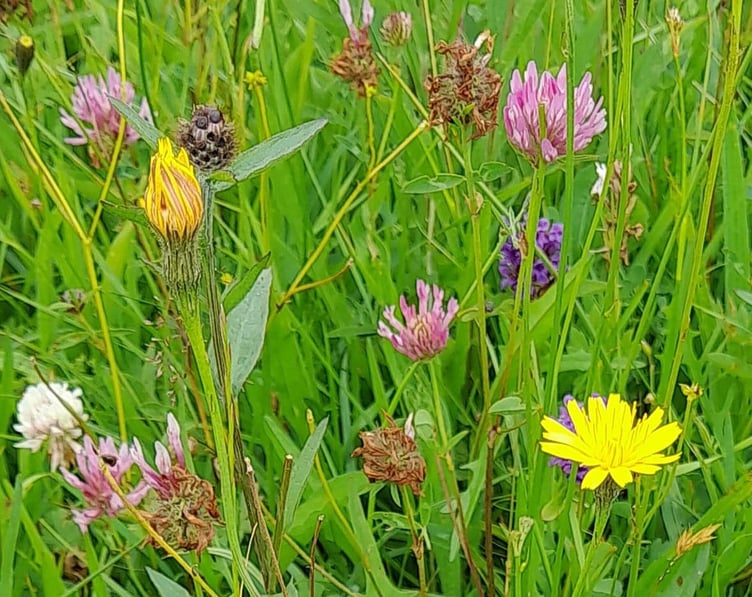
“He was over the moon about this and particularly chuffed that the site was near his family home.”
Burge’s Meadows was founded by Mr Watson to create a positive and uplifting legacy for his family.
To help people reconnect with the natural world, he established the charity to restore and preserve the ecological richness of wildflower habitats.
 Unacceptable that nine out of 10 burglars are never caught says MP Rachel Gilmour
 See the latest planning decisions and applications across West Somerset and Exmoor
 Dulverton and Exmoor Literary Festival lines up ‘Gavin and Stacey’ actor
 Reservoir levels still falling despite bank holiday cloudbursts across West Somerset
It aims to foster biodiversity, support pollinators, and enhance natural landscapes.
Wildflowers play a vital role in supporting ecosystems and enriching human wellbeing.
The spokesperson said: “Burge’s Meadows is committed to environmental restoration, education, and inspiration.
“Many of the charity’s meadows sites will be accessible and designed to help people reconnect with nature, fostering mental and physical well-being.
“To encourage meadows planting and habitat restoration, Burge’s Meadows offers grants for suitable sites which will contribute towards ecological advisory visits, wildflower seeds, and other aspects of the project.”
Donations in memory of the environmentalist’s achievements will go toward the national park authority’s (ENPA) own CareMoor for Exmoor charity, which has already proven its effectiveness, by forming the foundation for Exmoor’s ambitions to create 3,700 acres of additional species-rich grassland by 2030 and support 3,700 acres of nature-friendly farming areas.
“His legacy will help wildflowers return to the places where they belong.”
The Exmoor Sowing the Seeds project, launched in 2021, also works to reverse the decline of species-rich meadows, 97 per cent of which have been lost nationally since the 1930s.
Within Exmoor National Park, only 3.6 per cent of grassland remains species-rich, making restoration a high priority.
Since its launch, the project has supported 90 landowners, farmers, and community groups, restored or enhanced more than 1,180 acres of meadows habitat, and harvested and distributed over 591 kg of wildflower seed.
It has also delivered 78 botanical surveys, 30 bespoke management plans, 14 soil surveys, and worked with schools, community groups, and volunteers to deepen engagement with meadow habitats.
An ENPA spokesperson said: “These achievements are helping create well-connected, climate resilient habitats while supporting farm diversification, local communities, and nature-based education.”
Comments
We've recently changed our login process. If you have an account for commenting, you will need to re-register on the login window.
This article has no comments yet. Be the first to leave a comment.