
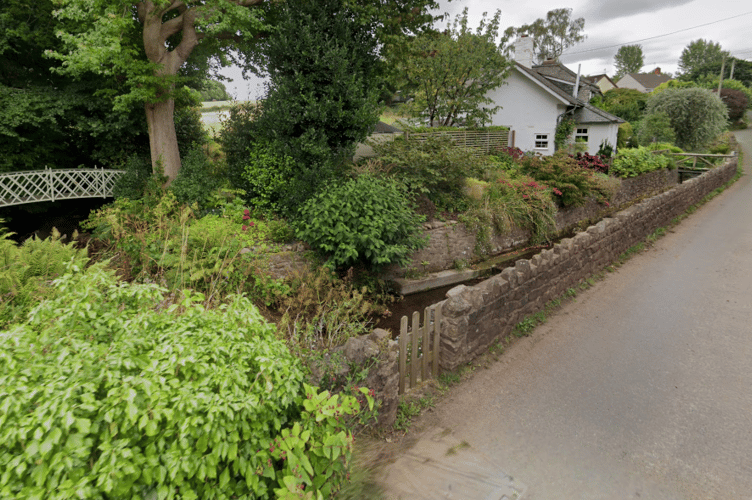
NUTRIENT pollution of an Exmoor river has been found to be low in a survey carried out by a local environmental group.
Sustainable Wootton Courtenay (SWC) took part in this year’s Great UK Waterblitz, the country’s largest citizen science project involving testing water quality in freshwater rivers, lakes, and streams.
Members sampled water in the village’s River Hanny, a tributary of the River Avill, which rises on the slopes of Dunkery Beacon, flows through Timberscombe, and empties into the sea across Dunster Beach.
SWC founder Ruth Walker said: “We were provided with test kits, detailed instructions, and a video explaining how to carry out the survey.
 Three-week New Year closure to allow A396 repairs six months after fatal coach crash
 Government should give Westcountry 'fair share' of funding says Exmoor campaigner
 Starlight spectacular beats the rain as Dulverton sparkles for annual festival
 Emergency services on scene of Exmoor crash with Stork Bram winds making A39 'unsafe'
“The River Hanny was tested for nitrates and phosphates at five locations in the village.
“Two separate water samples were taken at each location.
“We are really pleased to report the River Hanny samples recorded very low concentrations of nitrates and posphates.
“Excessive amounts of nitrates and phosphates can lead to water pollution, affecting both aquatic life and human health.”
Ms Walker said there was a ‘marginally higher’ recording at one location where the stream was said to have displayed discolouration earlier, but those results were not reflected in samples taken lower down the stream.
She thanked the residents who had given SWC permission to carry out the testing on their premises.
Nearly 8,000 communities across the UK too part in the project and surveyed more than 4,000 freshwater sites, with 66 per cent recording poor water quality.
Earthwatch Europe, which organises the Great UK Waterblitz twice a year, said nitrates and phosphates essential for plant growth occurred naturally in the environment with healthy freshwater ecosystems usually containing small amounts.
However, human activity could cause unnaturally high levels resulting in excessive plant and algal growth leading to high levels of bacteria decreasing oxygen levels and killing plants and animals.
Comments
This article has no comments yet. Be the first to leave a comment.