
VOLUNTEER drivers who help isolated, elderly and ill residents attend hospital and doctors' appointments could be forced out of the service after their mileage allowances were cut.
Washford-based volunteer driver and district councillor Richard Lillis said this week he feared rural areas like West Somerset would be the hardest hit by the changes, as volunteers could be unable to afford to continue using their own cars to run the service.
He believed the changes, which see drivers paid between 45p and 50p per mile for the first 10,000 miles in a year and then either 30p or 25p a mile thereafter, could force volunteers off the road.
That would mean medical trips would have to be covered by taxi firms - with taxpayers being left to pick up the bill.

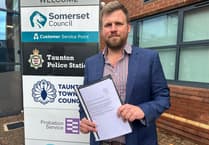

In his first nine months as a volunteer driver covering the rural areas of West Somerset, Mr Lillis has already covered almost 9,000 miles.
"Rural communities rely on this service and taxi drivers will not be able to cover it in the same way," he said.
"As volunteer drivers we get to know people individually and, with the best will in the world, taxi firms will not have the same knowledge, as we know who our clients are, where they live, where they have to go and what their needs are.
"In the snow I used my own 4x4 to help people on the top of Exmoor - how many taxi firms will be able to do that?
"Living in an area like this you can easily clock up 10,000 miles and many drivers will simply stop once they hit that limit.
"The rural communities are going to suffer and it is the taxpayer that will take the hit in the pocket."
Somerset County Council, which pays the volunteer drivers' costs, said it had been forced to change the mileage rates after being threatened with legal action by taxi firms who claimed volunteers were profiting from the scheme.
In a letter to drivers, the authority said it had taken legal advice and been advised that while its scheme was legal, rates needed to be cut for miles accrued after a 10,000 miles a year limit had been reached.
"This will protect voluntary drivers from possible prosecution," John Perrett, county council service manager, said in his letter.
Mr Lillis said he believed volunteer drivers should be able to claim some of their lost mileage rates back from the Government as legally they could claim up to 37p a mile for driving 16,000 miles a year or less before having to pay tax.
He said he had also been angered by the county council's decision to backdate the mileage changes to April, having previously told drivers the cuts would not take effect until this month.
"It's the public sector attitude of non-accountability that has really rattled me - they've basically told everyone that's what they're doing and that's it," he said.
"Who has to pay the extra charges when they have to use taxis when there are not enough volunteer drivers left? Taxpayers!"
The county council met many of Somerset's volunteer drivers at meetings in Somerton and Taunton during the week.
In a statement, it said the meetings had been called "to provide clarity and guidance on a new way of reimbursing volunteers for the miles they cover".
There are more than 200 volunteer drivers across the county and the council said it was grateful for the lifeline service they provided.
Cllr Harvey Siggs, the county council's cabinet member for highways and transport, said: "We consulted with our legal advisors and it was confirmed that our use of voluntary drivers is completely legal and all above board.
"However, we did receive advice that has led us to us change the way we reimburse our voluntary drivers for the miles that they cover.
"I want to be totally clear that our voluntary drivers are absolutely essential for thousands of Somerset residents to travel to vital appointments and access services across the county and we are extremely grateful for their time and efforts.
"They provide a highly valued and cost-effective transport service for thousands of our most vulnerable residents."
He said the use of volunteers was becoming ever more crucial to ensure the authority could continue to deliver essential services in the face of ongoing central Government cuts.
Comments
This article has no comments yet. Be the first to leave a comment.