
MOTORISTS who flout on-street parking restrictions in West Somerset could soon find themselves in trouble under plans for a radical overhaul of the district's parking system.
If proposals for a county-wide civil parking enforcement partnership progress, an army of local authority wardens could be patrolling the streets of West Somerset before the end of the summer.
Under civil parking enforcement, the responsibility for imposing on-street parking restrictions would pass from the police to a taskforce employed by local councils.
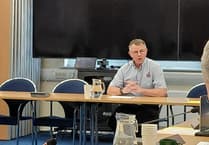
On Monday, West Somerset Council's cabinet gave its support in principle for Somerset County Council to push ahead with plans to set up a partnership with the area's district councils.
 Minehead police appeal as Jehovah's Witnesses hall attacked by right-wing activists
 Critics say dramatic fall in Somerset Council budget gap is 'smoke and mirrors'
 Anger continues over bid to by-pass cap on Somerset council tax increase
 Union says more Government money needed to recruit new Somerset firefighters
The county council would take charge of the scheme and local staff currently employed as car park wardens by the district councils would be transferred to the new regime.
District authorities would then be able to buy enforcement services for both on and off-street car parking from the county authority.
While the county council would retain any income derived from on-street penalties and cash generated by on-street charges or residents' parking schemes, the districts would retain the income from their off-street car parks.
Brian Cull, county council group manager, said the police had limited resources and turning on-street parking violations into civil rather than criminal offences would help crack down on the abuse of short-stay parking spaces in particular.
"Currently there are people who park all day in limited spaces but having a visible local authority presence on the street will reduce this abuse," he said.
It was estimated West Somerset Council would save around £45,000 a year by joining the partnership as it would only need to buy "enforcement hours", while the county council would cover the costs of wardens travelling to and from areas.
Councillors were told district council staff currently spent a quarter of their time travelling between locations, while better enforcement of on-street restrictions would force people into car parks, increasing the authority's revenue.
But while cabinet members welcomed the proposal, other councillors were more sceptical and accused the county council of trying to introduce a "stealth tax" on motorists.
Cllr Jon Freeman said: "I am always uneasy about something that is pushed through with unseemly haste.
"This is being driven by the county because the county stands to benefit from this.
"We might benefit but the lack of figures does not give the cabinet any detail on which to make a decision.
"I think this is a county council stealth tax that is not going to benefit the district council. It's nothing short of highway robbery."
Some councillors feared the existing level of off-street enforcement could be cut and questioned whether the council's car parks had enough spare capacity to cope with the additional motorists who would be forced out of short-stay, on-street spaces.
"If we are going to do this we must have places where people can park. Some car parks are already at 100 per cent [capacity]. Where will these people go?" Cllr Bryan Leaker said.
Several years ago a number of parking surveys were carried out by the district council as part of its bid to prove Vulcan Road car park was underused, surplus to requirements and available to be sold to a supermarket.
The consultations found that Minehead's town centre car parks
were full of shoppers because they were unable to park in short-stay, on-street parking areas due to commuters who blatantly ignored one-hour waiting restrictions.
The consultants estimated that of the 750 vehicles parked on-street around the town centre at the time of the survey, up to 300 belonged to commuters, while between 150 and 180 vehicles openly flouted waiting restrictions.
They believed that by enforcing on-street waiting restrictions, long-stay parkers would effectively be forced to park in car parks, freeing up on-street space for short-stay visitors and shoppers.
Council leader Cllr Tim Taylor said it was important parish and town councils were consulted to ensure their views on the proposals were taken into account.
He said the council was not yet committed to the scheme and a final decision on whether to sign-up would be made by the full council.
A detailed financial report on the implications of joining a civil parking enforcement scheme led by the county council will be considered at the June meeting of the cabinet before going to all councillors later the same month.
Comments
This article has no comments yet. Be the first to leave a comment.