
WEST Somerset Council is on the edge of a financial black hole that threatens to send it tumbling into the history books.
A hard-hitting report by the Local Government Association has concluded that after 2015, England's smallest district authority will be unviable - unable to deliver services or operate as a unit of local democracy.
The council's situation is, according to the two-strong team who carried out the independent investigation, "without precedent" - making it the first in the country to be facing the real possibility of going bust.
Michael Coughlin, the LGA's executive director and Neil Clarke, a councillor and lead member peer for the organisation, said consequently there was no established measure or definition of the viability of a council and no process nationally prescribed to deal with such a situation.
 Exmoor campaigner James Wright celebrates Government agreeing to protect Post Offices
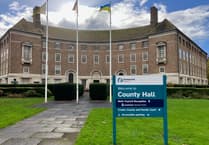 Somerset councillors warned to take control of spending before next year's elections
 Three kilometre spring wildlife walks will support Somerset space for hedgehogs
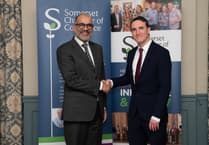 Somerset Lord Lieutenant takes up ambassador role for county business chamber
The report, which hit the in-trays of the 28 councillors and 70-plus staff this week, is the result of the council's own actions in facing up to a crisis it has been warning of for years.
The report authors said the council had taken a positive approach, been open and honest regarding its situation and "courageous" in inviting the independent investigation.
And although with a range of savings suggested by the LGA experts it could continue as a viable organisation serving the people of West Somerset over the next two years, its long term future is bleak.
The council's own forecast, assuming a 7.5 per cent reduction in Government funding for each of the next two years, assumes a budget deficit of £1.28 million by 2016.
The LGA assumptions are slightly less stark because of the inclusion of the 'New Homes Bonus' - money paid to the authority through the growth in house building in the district.
But although the LGA figures predict a deficit of less than £500,000 in 2015/16, this would rise to £1.5 million by 2019/20.
And with West Somerset able to raise just an additional £39,000 a year through a two per cent increase in Council Tax, the deficit on its annual net budget of under £5 million is deemed unsustainable.
The report highlights the need for clarification on the level of New Homes Bonus the council might attract, the amount of business rates it might retain and the funding of any community benefit payments from large scale developments, such as the proposed new nuclear power station at Hinkley Point.
But with input from neighbouring Sedgemoor district and Taunton Deane borough councils and Somerset County Council into the investigation, the LGA recommends that more partnership working with the authorities should be considered to address the medium term financial challenge facing West Somerset.
Shared service working is already taking place but the report highlights the need to do more, specifically in planning, building control and environmental health, back office and customer call centre services and human resources.
Sharing chief executive and senior management posts could also be an option.
The report concludes the council has undertaken "good work" to identify alternative options for cost reductions up to a maximum £1.28m.
But it says that although the authority might wish to minimise the impact on front-line services and staff jobs, some of the savings could be accelerated.
Other immediate options include charging for services such as pre-application planning advice and axing functions such as pest control - a service it does not have to provide.
The repayment of a £3.5m loan - due in February 2014 - could be funded by the sale of the former Aquasplash site.
And the council is also urged to reduce its priorities to ensure spending is focused on the top priorities only.
Aware of the looming crisis, the council has been considering holding a referendum to ask local people whether they would back a move to raise Council Tax above the current two per cent level allowed by the Government.
But under the council's own estimates, a 39 per cent increase would be needed to achieve a balanced budget up to the end of March 2016.
And although this would equate to less than £1 a week on an average Band D property, the report concludes that a referendum would be very unlikely to generate a result in favour of the level of increase needed to address the problem.
Given the limited capacity of the council's senior team and the costs involved, a referendum would be a "distraction".
Among the raft of recommendations, the council is also urged to have talks with the Boundary Commission to set up a possible review of local authority boundaries around West Somerset.
The council's leader Cllr Tim Taylor told the Free Press the findings of the LGA investigation had come as no surprise.
"The council has been alerting Government ministers to its precarious financial situation since 2008," he said.
"And we have been working in partnership with other local authorities to try and reduce costs for some considerable time."
Cllr Taylor, who met Local Government Minister Brandon Lewis in London with West Somerset's chief executive Adrian Dyer on Tuesday, said he felt the council was viable in the short term but there was a question over the viability of its core structure in the long term.
"We will take the LGA recommendations very seriously indeed," said Cllr Dyer.
"Much will still depend on the level of Government funding over the following years.
"We will continue to make the case for West Somerset to receive an annual income per head of population which at least matches that of other Somerset district councils so that we are able to provide services at a similar level to those provided by other Somerset district councils."
But Cllr Taylor said perhaps the most challenging statement in the report was the conclusion that the council was not viable as a unit of local democracy and governance over the longer term.
"We will therefore be considering all our options and councillors will debate the report at a meeting of the full council on December 12," he said.
Comments
This article has no comments yet. Be the first to leave a comment.