
WEST Somerset became the focal point in a bitter battle over the eradication of TB in cattle as a controversial badger cull finally got underway this week.
The National Farmers Union confirmed that the cull began in the district - the country's first pilot area and a claimed TB hotspot - at dawn on Tuesday.
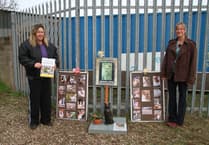
Just hours earlier, around 200 anti-cull protesters had staged a candlelit vigil through the centre of Minehead to demonstrate their opposition.
The event was organised by Somerset Badger Patrol, a Taunton-based group which has pledged to walk the lanes and bridleways in the cull zone every night for the full six weeks of the licensed shooting of badgers, which is being carried out by marksmen.

Spokesman Michelle Gunn told the Free Press yesterday (Thursday) that the group's action was entirely peaceful.
"We are not looking for confrontation but under the health and safety requirements of the licence, just our presence will be enough to prevent shooting taking place."
The patrols, which in the first few days of the cull have been between 30 and 60 strong, split into small groups, have focused on areas around Monksilver, Stogumber, Withycombe and Dunster.
Ms Gunn said gunshots had been heard in the areas but the protesters had not come into direct contact with marksmen on the ground or found any dead or injured badgers.
"Our main aim is to voice our disagreement with the cull and by our presence try to stop badgers being shot.
"But our second priority is to find any wounded badgers and prevent any suffering."
Although the group is attracting support from across the country, Ms Gunn said West Somerset people were also adding their voices to the campaign.
"I was contacted by three people from Minehead only last night who wanted to come out with us.
"We are getting offers of accommodation and food from people locally, which is great.
"We want to work with farmers and we absolutely respect the countryside and livestock - we always ensure we close gates and we would never behave irresponsibly.
"But we absolutely believe we can make a difference and stop badgers from being slaughtered."
The operation has drawn objectors from across the country, including a dozen protesters who set up camp on disused land at Doniford Halt on the outskirts of Watchet.
But on Wednesday 'Camp Badger' was broken up when the landowner evicted the protesters.
They are understood to have found a temporary site, after saying they were looking at Crown Estate land, but want the location kept secret until they find a more permanent solution.
Although the target cull in West Somerset is between 2,081 and 2,162 badgers - around 50 a night - no details of the number killed will be given until the end of the cull.
Police have been out in force across the cull zone, although a spokesman for the Avon and Somerset force refused to say how many officers had been deployed.
Although policing has been fairly low key so far, four people were arrested on Tuesday night in relation to public order offences in Somerset.
No details of where the arrests took place or whether any charges have been brought have been released.
No further arrests had been made up to yesterday morning.
In a statement the force said it had been planning for the cull for some time to make sure that communities were safe and felt safe while it took place.
"The cull is a private initiative being run by National England under a licence from the Department for Environment, Food and Rural Affairs," said the statement.
"However, we are ready to respond to reports of criminality and public disorder and we will maintain public safety if we need to.
"We believe the cull will attract protest and anyone planning a protest should contact us to work together in facilitating a safe, peaceful and legal protest.
"However, while we strive to facilitate peaceful protest, we will act robustly if anyone becomes involved in disorder or violence.
"Throughout the next few weeks the challenge we face is to balance the rights of the protesters with the rights of the wider community to carry on with their lives as normal."
South West landowners have also called for the operation to be allowed to go ahead without interruption from those who disagree with it.
John Mortimer, South West director of the County Land and Business Association, said the proposals had survived the democratic process, having been debated in Parliament and tested in the courts.
"They must now be allowed to proceed," he said.
"The companies and farmers engaged in the pilot control operations and the politicians who have been brave enough to tackle this issue have our unqualified support.
"These pilot schemes are a vital start to a programme to tackle and eventually eradicate bovine TB, which is a debilitating disease for wildlife as it is for cattle - yet the action to combat it has never been equivalent to the scale of the problem.
"The cost to the public purse will top a billion pounds over ten years but the cost in human terms, the misery and suffering caused to farming families is immeasurable."
Comments
This article has no comments yet. Be the first to leave a comment.