
TOURISTS, traders and residents are being asked to help keep Minehead's gull population under control.
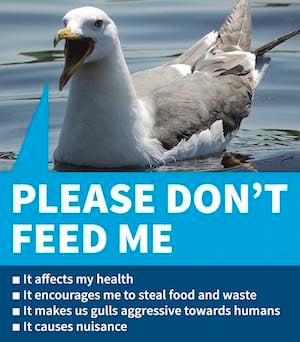
Posters are going up around the town urging people not to feed the sea birds in a bid to prevent the spread of disease and to discourage them from becoming aggressive and stealing food.
Three months ago Minehead Chamber of Commerce spearheaded anti-gull measures on the town's Mart Road Industrial Estate where the burgeoning gull population was causing a real headache.
Businesses on the estate donated around £2,200 towards the cost of an egg-swap scheme, which has seen real eggs swapped for artificial ones, as well as an increase in checks on public refuse bins.

.jpeg?width=209&height=140&crop=209:145,smart&quality=75)
Organisers were also hoping to use experimental netting on some buildings and monitor the effect with the help of a fixed camera.
The posters, based on a project already in force in East Devon, coupled with a plea for fast food outlets in the town to be more vigilant, are another step in the chamber's anti-gull arsenal.
"Gulls carry salmonella so any contact with human food is a risk to health," said Graham Sizer, the chamber's vice-chairman.
"The odd chip pinched from a bag may be comical, but it could have dire health consequences."
He said the exercise to swap seagull eggs for plastic ones was almost complete and it was now the turn of the community and visitors to play their part.
"Cutting off their modern day food supply is the next stage", said Mr Sizer.
"Like urban foxes, if there are easy pickings why bother digging for worms?
"I must plead with residents not to actively feed the gulls in their gardens. Everyone must play a part."
The posters, which have been designed and modified by East Devon Council, are primarily aimed at tourists and spell out the consequences of feeding the birds.
Handing them free meals encourages the gulls to associate people with food and makes them more determined and aggressive in their quest for a meal.
And a diet of junk food and takeaways is far from ideal for the birds, either.
"Takeaway food businesses will be encouraged to back the project as the danger to health has been well documented," said Mr Sizer.
The replacement eggs used on the industrial estate have been funded by West Somerset Council with the aim of "calming" the colony.
"No chicks will be born and aggressive hungry parenting will be reduced immediately," said Mr Sizer.
"With half the birds remaining on the nests until August waiting for the eggs to hatch, the nuisance over the summer months will be measured.
"In the long term, with no fledglings coming back the next year, the population will gradually reduce.
"But with a life expectancy of 20 years, it will be a long haul."
It is eventually hoped the gulls will look to more traditional sea cliff nesting sites if their industrial estate nests fail to produce young and their free food sources diminish.
The artificial eggs will be collected in the early autumn and the same process repeated next year.
Mr Sizer added: "Without young mouths to feed, the gulls should become less aggressive and if food has to be found in more traditional places, like the sea, then the natural nesting grounds on cliffs may become a good second choice to the roofs in Mart Road.
"However, we haven't been able to get to all the nests to swap the eggs, nor will the problem go away overnight.
"Hopefully though, the three year programme should show positive results and a gradual reduction in the colony."
Comments
This article has no comments yet. Be the first to leave a comment.