

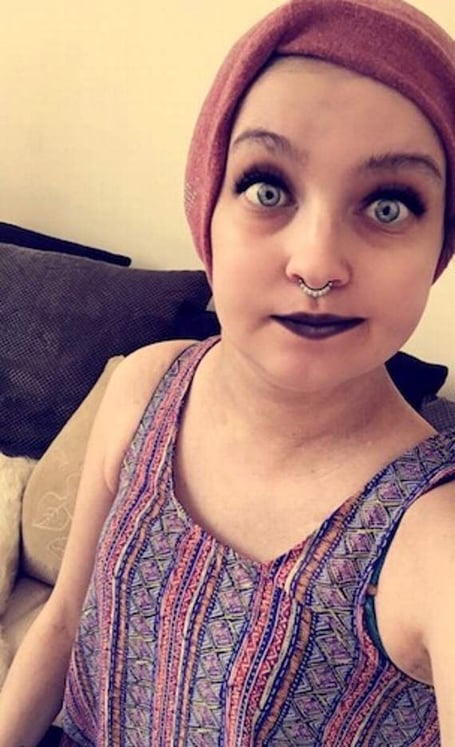
A 25-year-old Minehead woman, whose brain tumour went undiagnosed for months, is backing a national campaign to raise awareness among young people and healthcare professionals.
Ammy Harper suffered weeks of headaches, vomiting and tiredness, before she was eventually diagnosed with a brain tumour at the age of 23.
Now she is sharing her story to raise awareness of the cancer by backing The Brain Tumour Charity’s HeadSmart campaign, which aims to drive down the diagnosis times in children and young adults.
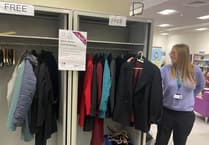
Ammy, who regularly volunteers at a local charity shop, is determined to raise awareness for the devastating disease.


“It’s really important to me that more people, both the public and healthcare professionals, are aware of the symptoms of brain tumours so that others avoid sharing my experience,” she said.
She initially started to get a lot of sickness and sleepiness, with headaches and vomiting, but as migraines ran in the family, she put it down to that.
After weeks in bed, she finally visited her GP but, although tests showed a high white blood cell count, she was reassured this was nothing to worry about.
Her symptoms progressively worsened, the sickness did not pass and she started to lose her balance and fall over a lot. But, after further visits to the GP, she was told that tests appeared fine.
Then things escalated.
“I woke in the night due to severe pain and I could no longer lift or move my head,” Ammy said.
“My partner took me to A & E, where I was again told that everything was fine.”
As Ammy suffers from a genetic condition called neurofibromatosis type 1, an MRI scan was suggested – and that’s when the tumour was discovered.
“At first it didn’t sink in or seem real. I was blue lighted to Bristol Southmead Hospital, where my initial biopsy showed that the tumour was low grade or non-cancerous.
“However a second biopsy confirmed it was a high grade, cancerous tumour,” Ammy said.
She was referred for surgery and had 75 per cent of the tumour removed but within three weeks it had grown back.
“I went for surgery again, this time 95 to 97 per cent was removed. It was too dangerous to completely remove it, as it had spread to my brain stem.”
Since surgery, Ammy has received both radiotherapy and chemotherapy, is currently doing well and her most recent scan shows that the tumour has shrunk slightly.
“I often feel weak and tired from the treatment and one of the worst things has been losing my hair – I was really shocked that it fell out in patches and clumps.
“I hope by sharing my story, it will help other young people deal with this,” Ammy said.
Doctors will continue to monitor her for any further treatment but she is hopeful about the future.
“I am optimistic that, with the constant advances in cancer treatment and research, there will be new options to treat and ultimately, cure brain tumours.”
The national HeadSmart campaign is run as a partnership between The Brain Tumour Charity, the Children’s Brain Tumour Research Centre and the Royal College of Paediatrics and Child Health.
It has reduced the average diagnosis time for children with brain tumours from 13 weeks to 6.5 weeks, and continues to campaign to increase awareness among GPs and healthcare professionals, and reduce diagnosis times even further.