

Exmoor’s quiet rejection of a lagoon
THERE’S a moment in the 1980’s film Local Hero when you realise the real protagonist isn’t the oil executive or the villagers — it’s the land itself. The sky, the celestial wonders, the shoreline, the water. They’re not background; they’re the characters with the deepest history and the most to lose.
West Somerset understands that instinctively.
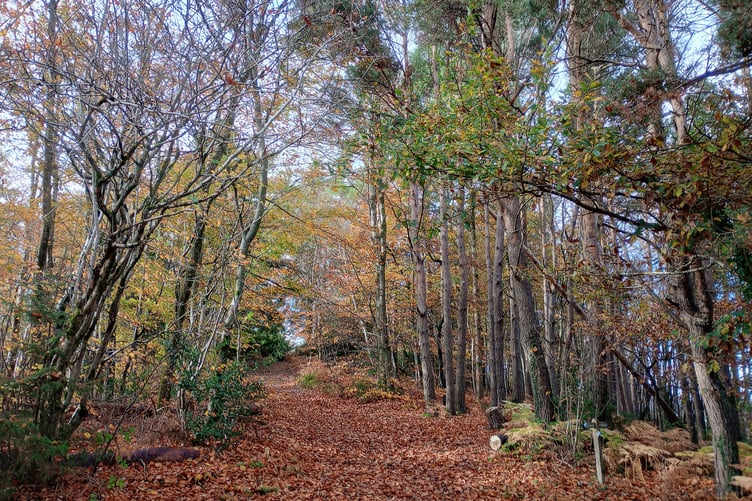
From the high shoulders of Exmoor to the long sweep of Blue Anchor Bay, this landscape has shaped the people who live here. It has taught them patience, resilience, and a sense of scale that makes grand engineering schemes look strangely small. The proposed West Somerset Lagoon may be the latest in a long line of “transformational visions,” but the land and the people who know it best are quietly, firmly, saying no.
 West Somerset libraries continuing to offer free winter coat exchange
  'Time running out' for beleaguered Somerset Council to avoid going bankrupt
 Allied Pharmacies brothers update MP Rachel Gilmour on rescue of Jhoots branches
 NHS Somerset urging elderly to take up winter offer of free RSV vaccination
Not because they oppose renewable energy. Not because they fear change. But because they recognise when a project is out of tune with the place it claims to serve.
Walk the coast path from Minehead to Watchet and you’ll see why. The cliffs at Culvercliff, the shifting shingle at Blue Anchor, the tidal flats that breathe in and out twice a day — these are not empty spaces waiting to be filled. They are living systems, shaped by centuries of tide, weather, and human use. They hold stories: of fishing families, railway workers, lifeboat crews, and generations who have learned to live with the sea rather than wall it off.
The lagoon proposal imagines a corridor of concrete and turbines where the coastline currently moves with the tide. It imagines a new identity for West Somerset — one defined by industrial scale rather than natural character. But the people who live here don’t recognise themselves in that vision. They don’t see a future shaped by a vast engineered barrier. They see a coastline that already gives them everything they need: beauty, heritage, livelihood, and most of all - a sense of belonging.
West Somerset doesn’t need reinvention. It needs respect. It needs development that works with the grain of the place, not against it.
The lagoon may promise power, but Exmoor and its people already have their own — the power to say that some places are defined not by what you build, but by what you choose to leave untouched.
Rod Scotney
Minehead
Proposed rise in council tax
Dear Editor,
Regarding the proposed 11 per cent council tax increase, the argument that Somerset has one of the lowest levels of council tax feels flawed.
We also have some of the lowest average wages, so why should our council tax be comparable to far wealthier areas. That comparison ignores the reality of what people here actually earn and can afford.
There are also serious questions that are never properly explained. Why are there such high numbers of SEND children, and is that being examined in detail. Spending on adult social care is said to be extremely high, but how is that figure broken down.
How much relates to elderly people, and how much to adults who cannot care for themselves. Instead of simply squeezing residents for more money, these issues should be properly scrutinised and improved.
Yours faithfully
Karen Telling
Somerset resident
A chemical in the environment
Dear Editor,
It was worrying to read the letter about the use of the herbicide glyphosphate, January 30 edition.
Being one of the most nature depleted countries on the planet, I do not think we can afford to be so blasé about the use of chemicals in the environment.
Surely we should have learnt by now to beware of unintended consequences using and relying on chemicals in the environment.
There is a list of chemicals that have been banned over decades because of the persistent impact they have on our water, soil and animals from the bottom to top of the food chain. That includes us humans!
In 1972 I saw first hand raptors with malformed limbs and egg shells too thin for the chicks to survive because of the widespread use of dieldrin and paraquat.
For evidence about glyphoshate, just read the unbiased Soil Association leaflet on the impact it has on our soil.
This includes the loss of soil microbiome i.e. the life in the soil that keeps it well structured and fertile with beneficial fungi.
Loss of these components also results in compacted soil unable to infiltrate water, increases erosion and impairs fertility.
Seeing the flooding across the country today, perhaps this is one of the many unintended consequences of using chemicals on our precious soil.
Paul Rutter
Williton
Traffic management needed
Dear Editor,
A traffic management plan is integral to all permissions involving building or highway work.
Yet on February 3 at 9am traffic was queued back to the Withycombe turn and took 40 minutes to reach the Dunster turn yet traffic from Minehead took 10 minutes.
How many hours lost to business?
Obviously County Highways are to blame for either having no plan or not enforcing one if they do have plan.
Someone with a name is responsible but will never be named or penalised for such incompetence since government at all levels covers miscreants failures.
In the meanwhile (council) taxpayers pay up through gritted teeth and tighten their belts to allow for less than five day working, substantial pensions, sick days and holidays.
It is individuals who should be held to account (as they are in private commerce, SME's and industry) and named and disciplined as well as the Party in power.
Incidentally since most folk thought that the Dunster lights were some of the best for traffic flow why replace a system which worked well?
Surely the money could have been better used.
Yours sincerely,
Stuart Dowding
Bicknoller
Comments
This article has no comments yet. Be the first to leave a comment.