
They say they are disappointed by the reaction of the Fire Brigade Union (FBU), which this week attacked the schemes, claiming the ambulance service was using firefighters to bridge gaps in its own service.
Under the co-responders scheme - which is soon to be launched in Williton - firefighters in rural areas are trained in advanced first aid skills to ensure patients in more isolated areas receive life-saving treatment within minutes of making a 999 call.
The aim is to reach patients within the Government's eight minute ambulance target time as those eight minutes are deemed to be the most important for treating a heart attack victim.


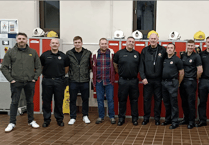

West Country Ambulance Service spokesman Catherine Ferguson said she had been disheartened by the response of the FBU, especially as the co-responders scheme had proved so popular among patients, rural residents and the volunteers themselves.
She said people from all walks of life, not just firefighters, worked as co-responders to offer heart attack victims in particular the best possible chance of survival.
Ms Ferguson said: "Getting early defibrillation to patients who need it is the key and it is a simple fact that in rural areas people who live in the community are going to be able to reach a patient more quickly than an ambulance.
"The co-responders are not there to replace paramedics - an ambulance is dispatched as soon as a 999 call is received - they are there to administer vital first aid as quickly as possible.
"We have co-responders who are lifeguards and even off-duty ambulance personnel give up their spare time to run the schemes. The volunteers are not just firefighters.
"We have the largest geographical area to cover of any ambulance service in the country and, unfortunately, we simply can't put an ambulance on every street corner."
But the FBU members accuse the ambulance service of continually failing to meet attendance time targets and claim the co-responders are being used to improve target time statistics when, in reality, paramedics may not reach certain patients for anything up to 30 minutes.
Somerset FBU chairman Steve Underhill said: "When a member of the public dials 999 during a medical emergency they expect and deserve highly trained professional paramedics to arrive in a short space of time, not a crew of firefighters on board a fire appliance who, although well meaning, can never expect to properly fulfil a specialist medical role in those vital first few minutes."
His views were supported by Somerset FBU secretary Tam McFarlane: "It is important that the public within Somerset are given a wider warning regarding the dangers of these local co-responder schemes, which replace ambulances and paramedics with fire appliances and firefighters as a first attendance to their call.
"This issue has to be dealt and these schemes stopped in order to make West Country Ambulance Service face up to their responsibilities and give the public the service they deserve."
Ms Ferguson said the co-responders had never and would never replace trained paramedics.
Their only role was to administer vital first aid in the minutes before an ambulance crew arrived on the scene.