
'CHARITY begins at home' was a motto that adorned many a Victorian British mantelpiece. The irony, of course, is that Britain's extraordinary rise to global dominance was built on rather more than domestic virtue; in fact, vast swathes of its own population lived in Dickensian poverty. Britain’s wealth emanated, overwhelmingly, from its imperial adventures in distant territories, from the extraction of resources, labour and land across continents.
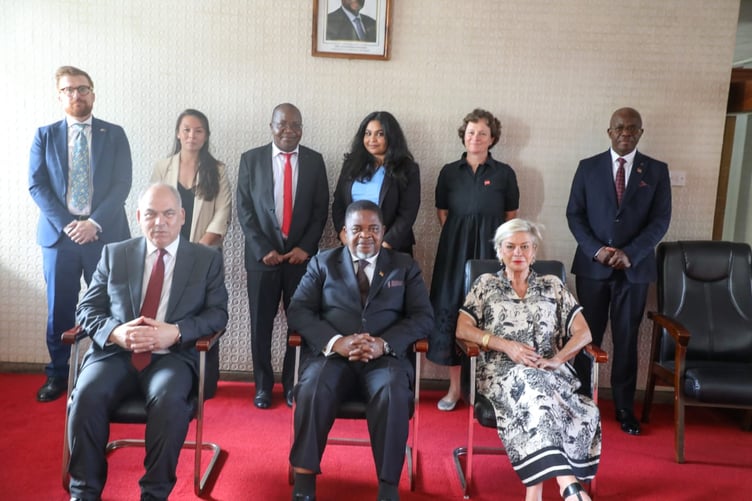
Malawi was one such territory. Known then as Nyasaland, it became a British Protectorate in 1891, during that period of great power jostling known as the ‘Scramble for Africa’. It remained under colonial rule until its independence in the summer of 1964. The long arc of that history can still be felt today, and I was reminded of this with particular force during a recent visit as part of a small parliamentary delegation organised by Results UK.
I believe that travel is the best form of education. It also makes one reckon with what we take entirely for granted at home. Malawi is one of the poorest countries in the world - a landlocked nation of extraordinary natural beauty but also extraordinary need.
Sitting in on foundational classes, the weight of colonial inheritance was impossible to miss. English remains the official language of instruction in Malawian schools, despite the fact that the vast majority of children grow up speaking Chichewa. The consequences of this are clear. I watched children answer mathematical questions correctly in their native tongue, demonstrating real understanding and real aptitude, only to be marked down because they could not express themselves in a language that was not their own. It was not their mathematics that was failing them. It was a system that has long since departed, but whose structures remain in place.

This is precisely why investment in education - quality education, delivered in a language children actually understand – can be so transformative. And it is why international development is not, as its critics sometimes suggest, an act of naïve sentimentality or hopeless do-gooding. It is, in the fullest sense, an investment.
When developing nations are able to improve living standards, build institutions and grow their economies, they become trading partners; markets for British goods and services, allies in international forums and participants in a stable global order. The alternative is a vacuum, and vacuums do not stay empty for long.
Britain's soft power is not a cosy concept; it is our reputation, our relationships and, ultimately, our ability to shape the world. It is built through presence and partnership, and through the kind of principled engagement that development work represents. A Britain that plays its part in investing in the development of countries like Malawi is a Britain that earns goodwill, builds influence and demonstrates that its values are more than rhetoric.
So yes, charity may begin at home. But it cannot, and perhaps should not, end there. The question for this generation is not whether Britain can afford to be a force for good in the world. It is whether we can afford not to.
Comments
This article has no comments yet. Be the first to leave a comment.