
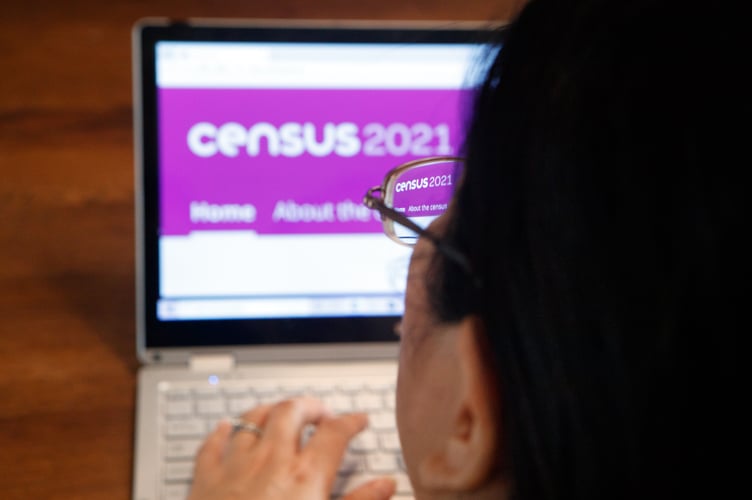
From unpaid carers to disability, the recent census has revealed areas where there are significant differences for men and women in Somerset West and Taunton.
It comes as International Women's Day is celebrated this week with women's rights charity The Fawcett Society saying more concerted action is needed to tackle gender inequality in the UK.
The census survey taken across England and Wales in March 2021 shows of the 157,445 usual residents in Somerset West and Taunton, 80,970 are women – accounting for 51.4% of the area's population.
In Somerset West and Taunton, women made up 59.5% of unpaid carers, meaning they were looking after someone because of long-term physical or mental health conditions or illnesses, or problems related to old age without compensation.

This is similar to the trend across England and Wales where there are approximately 2.8 million female unpaid carers and approximately 1.9 million male unpaid carers.
Additionally, women in Somerset West and Taunton were more likely to have a disability than men, with 18.5% of women stating they were disabled in the census, while 16.7% of men did.
The recent census also revealed 7,920 people in Somerset West and Taunton had previously served in the UK armed forces. Just 1,105 (14%) of them were women.
Jemima Olchawski, chief executive of the Fawcett Society, said there is not a single "sure-fire" solution to improve gender equality in the UK, but more action is needed.
"This Government must urgently reform the childcare system so that it is affordable, accessible, and works for women and employers must make flexible work the default," she added.
She said: "We simply can't allow this Government to stand by as women's hard-fought gains are lost."
The survey also highlighted women in Somerset West and Taunton were more likely than men to identify with a sexuality other than heterosexual. Figures show around 1,985 women in the area (2.9% of women) identified as lesbian, gay, bisexual or another minority sexuality, while 1,410 men (2.2%) did.
Across England and Wales, females (3.3%) were more likely to have identified as lesbian, gay, bisexual or another minority sexual orientation than males (3%).
Census data shows 95.6% of women in the area identified as white, 0.5% as black, 2.1% as Asian, 1.3% as mixed and 0.5% as another ethnicity.