
OUTBREAKS of bovine tuberculosis and the threat of foot and mouth disease could prove to be the last straw for many Exmoor farmers.
Changes in EU farm policies, food scares, economic pressures and conflicting Government directives have left the farming industry in deep depression.
The miracle cure cited by many is for farmers to diversify into direct marketing initiatives, 'niche markets' and tourism.
But Exmoor farmers believe they have reached diversification saturation point and fear they will ultimately be unable to keep up with the ever-changing needs of the tourism industry.
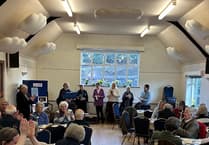
Now members of Exmoor National Park Authority are being asked to concentrate on these problems and have a special meeting to focus on the future of farming on the moor.
Chief national park officer Dr Nigel Stone will tell Tuesday's annual meeting of the authority that action needs to be taken now to secure a viable future for Exmoor's farmers.
In response to concerns about the agricultural industry, the park authority formed a farming working group at the end of last year.
Dr Stone said the group had been unable to finish its work due to the outbreak of foot and mouth, but such was the need, members at the meeting would be asked to consider the findings of the group's preliminary report.
Dr Stone said: "Since February, foot and mouth disease has had a significant adverse impact on farming on Exmoor even though no case of the disease has yet been confirmed within the national park area.
"This adverse impact comes at a particularly bad time when farm incomes on Exmoor are already in severe depression.
"These recent events have made the work of the working group particularly important and has increased the need to act now to help secure a viable future for Exmoor agriculture that sustains the environment, economy and social fabric of the national park.
"Hence the draft report of the working group is presented to the authority now, even though a final meeting of the group has yet to be held."
The working group is predominantly made up of farmers who were randomly selected from those who either volunteered or who were put forward for the job.
The aim was to produce a 'vision for farming', a picture of how local farmers would like to see farming on Exmoor develop over the next 20 years and to ensure that national park policies did not conflict with that vision.
The group found that agriculture remained the most important employer on Exmoor with just under a third of the total labour force in the national park working directly in farming.
However, changes in the payments of subsidies had left most farms suffering substantial reductions in incomes. Second incomes from diversification projects such as B&Bs and horse-riding had also been hit due to the foot and mouth crisis.
The report said the options for agricultural production on the moor were limited and store lambs and suckler calves were likely to remain the main products.
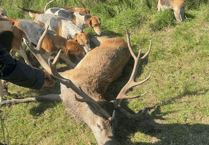
However, more research was needed to identify other potential products, including 'energy crops' and the marketing of game and venison.
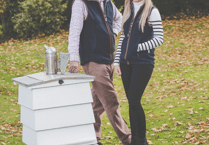
Other suggestions included taking a group approach to selling produce directly to customers, increasing the number of farms involved in game shoots and looking to Europe for more money for environmentally-friendly farming schemes.
But it could be an uphill struggle as the group reported that farmers found European funding far too difficult to access, while the grants that were available to look after the countryside were simply not enough.
The report also warned: "The word 'diversification' was a great irritation to some of the working group members because of the apparent over emphasis on diversification as the answer to current farming problems.
"In practice, many Exmoor farms have already diversified, especially into tourism related businesses to the point where there is concern about over provision of certain types of accommodation.
"Many Exmoor farming families also secure additional incomes from work away from the farm, often with family members undertaking a range of part-time and/or seasonal work, often in return for relatively low wages."
The group's draft report concludes with 16 recommendations on how to set about securing the future of the moor's farmers.
The national park authority is being asked to do all it can to support traditional farming techniques alongside agri-environmental schemes and sustainable tourism projects.
Hands-on help and advice should be given to obtain grants from both London and Brussels and greater promotion undertaken of successful rural businesses, which do not detract from the landscape and biodiversity of the park.
The report added: "Farming is essential for the future conservation of the national park landscape, wildlife and cultural heritage and the management of land for amenity and recreation.
"The outlook for Exmoor is likely to be a multifunctional form of agriculture involving both food production and other outputs.
"The actual options for Exmoor farmers, in terms of farming or diversification, are limited by the location and characteristics of the area.
"More research needs to be undertaken into other products that might be produced on Exmoor with a reasonable rate of return and in a way that is compatible with national park objectives."