

A FORMER owner of a centuries old Exmoor craft centre and tearoom has written a book about the spirits said to have inhabited the building.
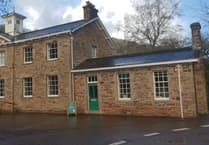
Ian Mawby bought Pulhams Mill, in Brompton Regis, more than 40 years ago in 1978 and over the years developed it from being a ‘romantic ruin’ to a successful and popular visitor destination.
Mr Mawby said when he decided to sell up, it took four years to happen despite the fact it was a ‘beautiful place in an idyllic setting’.
He said: “We could not understand why we had so much trouble.
.jpeg?width=209&height=140&crop=209:145,smart&quality=75)

“We have friend, Gary Cooper, a world-renowned classical concert pianist, who is also a shaman.
“So, he dowsed the ancient Domesday Book (1086) mill and said there were at least five spirits in the mill, which he banished.
“We then sold the mill at auction.”
Mr Mawby said the experience ‘seeded my creative juices’ and at the age of 81 years he had now written a book ‘The Auction Room - Spirits of the Mill’ under the nom de plume Powers, which was his rarely used first name.
The book, which Mr Mawby hopes will be published by Christmas, features a number of dramatic local ‘factional’ stories of the spirits which died at Pulhams Mill through the ages.
They go back to 1086 and Gytha of Wessex, mother of King Harold, who had a manor at Brompton (subsequently, Regis). The millers’ eldest son died at the mill of injuries sustained in the Battle of Hastings as a friend and soldier in Harold’s defeated army.
Then, in 1490 there was the spirit of the gambling second son of the miller.
Another spirit was Peter Gadd, at the Barlynch Priory lookout tower at the top of Bury Hill, from 1535.
The millers’ eldest daughter Anna married the Vicar of St Decuman’s and survived the ‘Somerset tsunami’ of 1607 after having her first-born on the roof of a cottage in Watchet. She died of exposure on her return to the mill.
In 1914 the then-16 years old Frances (Frank) Wescott joined the Somerset Light Infantry and went off to war in India. Frank returned to the mill branded as a deserter, but was subsequently recognised as a hero.
Jerry Winzor a criminal, rapist, deserter, and then a French Resistance hero in 1941 returned to the mill as a spirit.
Mr Mawby said: “Although my stories are fiction, they have a lot of local interest based on historical facts.”
He is planning to produce some illustrations for the book before it is published because ‘a picture paints a thousand words’.
Comments
This article has no comments yet. Be the first to leave a comment.