

IT was a crack express and the first steam locomotive to officially break the 100mph speed record, but this week the Flying Scotsman met its match on the slippery slopes of the West Somerset Railway.
During its visit, which ended on Tuesday, the giant locomotive several times needed an extra push from a local steam or diesel engine when it failed to grip on gradients due to wet slippery rails.
The 94-year-old LNER Class A3 Pacific was designed for going fast on level tracks.
And WSR staff, anticipating there could be problems with wheel-grip on the line’s steep gradients at slow speeds, provided banking engines to help out in wet weather.
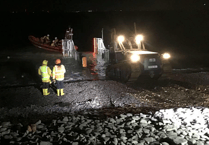 Lifeboat crews brave 'tricky' seas for twilight rescue of pair trapped near Kilve
 Campaigner fears West Somerset tidal lagoon architect tainted by £51 million debts
 Parenting questions as children as young as 11 cause trouble across West Somerset
 Mixed reaction from West Somerset residents to new tidal lagoon proposal
“Being restricted to 25mph meant the engine couldn’t get a run at the gradients,” said an WSR official.
“The worst are the Lydeard and Washford Banks and there are some very tight curves outside Watchet.”
As a precaution, the WSR’s 73-year-old ex-Great Western Railway locomotive Raveningham Hall was on standby at Bishops Lydeard during wet weather to provide extra power on the Lydeard Bank outside the station.
WSR general manager Paul Conibeare said providing a banking engine on steep gradients had long been standard railway practice.
“It was a sensible precaution with a locomotive like Flying Scotsman, which was not designed for slow speeds on country lines, and meant we could keep to our schedules and give passengers a trouble-free ride.”