
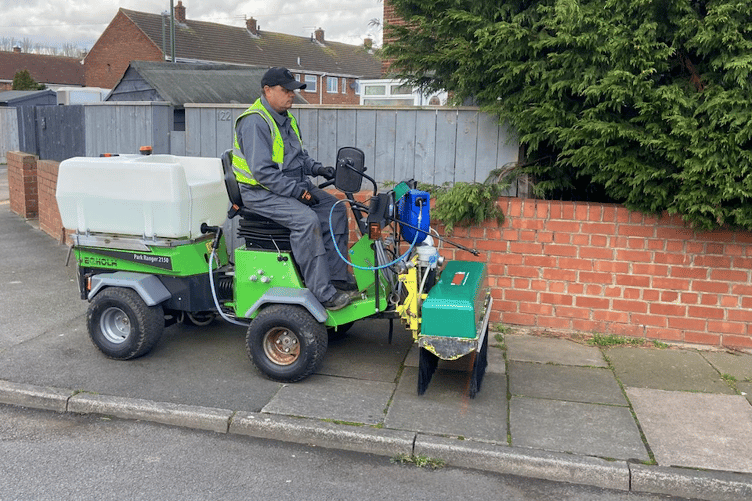
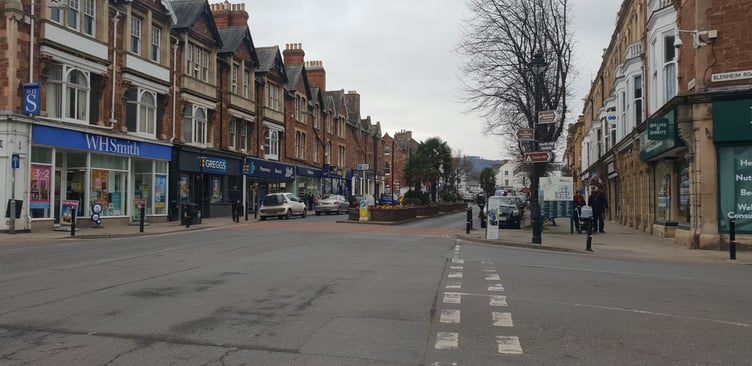
REINTRODUCING a glyphosate-based herbicide to kill weeds in Minehead’s streets last year was both successful and popular with residents, town councillors have been told.
Now, councillors have agreed to repeat the exercise in 2026 and ask contractors to expand the work to cover North Road and Alexandra Road car parks and service lanes in the town centre.
Contractors will make three visits in May, July, and October, as they did last year.
Town clerk Ben Parker said targeted street weed control was reintroduced in 2024 following several years of inaction and two years trialling alternative methods.

Mr Parker said: “These alternatives proved costly, largely ineffective, and raised ecological concerns of their own.
“Public feedback and a significant increase in complaints highlighted that residents expected street weed control as part of the town’s maintenance.
“The council therefore decided to reintroduce controlled and targeted herbicide use for 2025.”
Mr Parker said concerns about glyphosate mainly related to large-scale agricultural use, but when used responsibly in streets and parks it posed little-to-no known risk to human health or the environment.
The Government had extended approval for the chemical until December this year while a full scientific review and public consultation took place.
Mr Parker said contractors used advanced application methods with adjuvants and chlorophyll sensors, and precision nozzles for accurate and limited application.
An issue faced in 2025 was that despite previous manual clearance and alternative methods, weeds were well-established, and the seed bank was substantial.
Some streets were also missed during the initial treatment and visible differences in weed die-off could be seen, but the contractors returned promptly to address them.
The third visit of the year was hindered by a lack of proactive leaf clearance, which contributed to detritus and future weed growth.
It was the first herbicide application in about five years and some public concern was noted, particularly social media reports of dogs becoming ill after walking in Park Walk.
However, it was pointed out only street weeds had been treated, and not parks, and the issue did not escalate.
Mr Parker said all three visits were scheduled early in the day to minimise public contact and ensure safety when operating machinery on footways.
He said the contractors highlighted the lack of proactive weed control which meant recovery would take time, and the goal was an ‘acceptable level of control’ because complete eradication was unrealistic.
Mr Parker said the firm occasionally received adverse comments when working in public spaces due to negative perceptions surrounding glyphosate use.
But, in Minehead, it reported a significant number of positive comments from residents who appreciated the role that responsible glyphosate application played in maintaining a clean street scene.
Mr Parker said: “A small number of residents requested that herbicide not be applied outside their properties.
“These requests were respected and the contractor was provided with the relevant locations to avoid.”
Mr Parker said the council’s ambitious open spaces rewilding programme helped offset any perceived environmental concerns and habitat loss.
Comments
We've recently changed our login process. If you have an account for commenting, you will need to re-register on the login window.
This article has no comments yet. Be the first to leave a comment.