
I no longer live in the UK, but I was, for well over 30 years, a resident of Somerset, and was heavily involved as a volunteer worker in many aspects of restoring and operating the West Somerset Railway: From the days when it was a woefully undercapitalised operation, struggling to operate with a couple of worn-out shunting locomotives, half a dozen battered carriages and a couple of tatty diesel units, to recent years when it has grown to be one of the leading heritage railway operations in the country, and a significant if not the most significant tourist attraction in West Somerset.
I should imagine that were it to cease operating, or drastically curtail its operations as proponents of using the line propose, then it would have a very noticeable effect upon the tourism industry in the region.
That transformation is a result largely of many, many thousands of hours of volunteer work annually, in all aspects of running the business, from the men with blue overalls and red and white spotted hankies driving the locomotive to the elderly ladies and gentlemen washing up teacups in various refreshment rooms up and down the line. Hundreds and thousands of man-hours are given voluntarily, by many, many people, from widely diverse backgrounds, for a huge variety of reasons.
Beresford Mandley is being disingenuous in suggesting that it is merely the cries of a few steam train enthusiasts who oppose these proposals.
 Food hygiene ratings given to four Somerset establishments
 Government should give Westcountry 'fair share' of funding says Exmoor campaigner
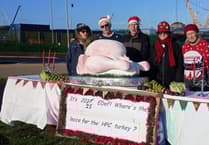 Delays in constructing Hinkley C nuclear power station highlighted by protestors
 Trial fixed for pair who deny involvement in Watchet £26.5 million drug trafficking
Robin White (and yes she is a friend of mine) outlined the staffing and infrastructure requirements, and associated costs of the operation proposed by the MRLG. If anything, given my extensive knowledge of operating the railway, I would suggest that she has rather underestimated those costs. I am sure that the Great Western Railway would be happy to run such a service if the costs were guaranteed to be met. Those costs could only be met by massive, almost total, public subsidy. An unlikely prospect in the current political and financial climate.
Any attempt to operate such a service without those costs being guaranteed would simply destroy the railway in weeks.
Even if the funds to guarantee those costs were to be, somehow, found, then the heritage operation, which Beresford Mandley dismisses as a ”train set” and which brings so many people and so much money into West Somerset, would be so hampered that it would probably fail within one season. And the closure of the railway would mean the end of any commercial service.
Perhaps the reality (and impact) of what the MRLG are proposing to do to the WSR can be illustrated if we look at a (totally fictional) parallel proposal.
I believe that Mr Mendoza, one of the prime moving forces behind this idea, owns and operates a rather good and successful hotel in Minehead. Now, let us consider that a public-spirited group propose to make use of the kitchen, lounge and public areas of Mr Mendoza’s hotel as a drop-in daytime treatment centre for those with drug and alcohol addiction problems.
Of course, there would have to be some minor changes to the way the hotel is run – breakfast would have to be finished by 7.30am, and under the circumstances, a bar would not be a wise idea! But I am sure that these changes could be accommodated, to allow the hotel to provide a much needed public service.
Ridiculous isn’t it? And if it were to happen, the hotel would go bust in months, and then the drop on centre would have to go somewhere else.
John A Guest, Chiang Rai, Thailand
Comments
This article has no comments yet. Be the first to leave a comment.