

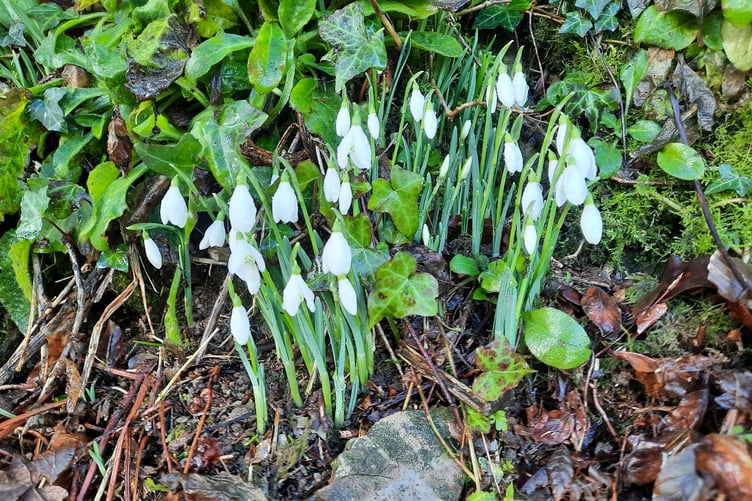
La-la land wishful thinking
Dear Editor,
Ben Parker's comment in the January 16 WSFP article on the decision to reinstate glyphosate to control street weeds is frankly la-la land wishful thinking. He says that 'when used responsibly in streets and parks it poses little-to-no known risk to human health or the environment'. This simply isn't true. In 2025 Pesticides Action Network published the most comprehensive independent animal study ever conducted on glyphosate. It shows that long-term exposure to glyphosate and its formulations, even at very low levels equivalent to the EU’s Acceptable Daily Intake, causes early-onset leukaemia in rats. Worryingly, it also reveals a significant increase in multiple other types of tumours (e.g. skin, liver, thyroid, nervous system, ovary, mammary gland, adrenal glands, kidney, urinary bladder, bone, endocrine pancreas, uterus and spleen), providing solid evidence of glyphosate’s carcinogenic potential.
Glyphosate use has also been linked to other serious diseases such as Parkinson’s. Moreover, it has been shown to have devastating impacts on biodiversity, harming wildlife directly and removing plants relied upon by birds, insects and other animals for food and shelter. It is known to disrupt the gut microbiomes of bees, causing them to become more susceptible to deadly pathogens such as the viruses carried by varroa mites. The chemicals also run off hard surfaces in towns, contaminating water courses and harming aquatic species.
The alternatives may not be as effective in controlling weeds, but the use of glyphosate has to stop. In years to come, when it has been banned completely (and it will be, once governments stop pandering to manufacturers whose profits depends on it), we will look back on Mr Parker's comments and shudder.
Marion Jay
Wootton Courtenay
Traffic signals replacement fiasco
Dear Editor,
The current focus on tweaking traffic management at Dunster Steep avoids the more serious question: why this scheme was approved in a form that guaranteed months of disruption in the first place?
This is a straightforward rural A-road junction. A prolonged daytime programme with temporary signals was not the only option - but it was the one chosen. Was a full weekend closure considered? Was night working assessed? If so, where is the published options appraisal that explains why residents and businesses were expected to absorb months of predictable harm instead?
These decisions are not made by engineers in isolation. They are signed off politically. Cllr Richard Wilkins, as Cabinet Member for Transport, has a growing track record of approving road schemes that align neatly with his transport priorities while showing scant regard for local economic and social impact - followed by reactive firefighting once public anger becomes unavoidable.
If the decision was sound, Somerset Council should publish the cabinet approval paper and supporting officer report that authorised this scheme.
This is not a question of traffic lights. It is a question of judgement, accountability, and whose interests come first.
Yours faithfully,
David Parkes
Minehead
Finding time to give back
Dear Editor,
Many people want to give back to their communities, but sometimes finding the time to volunteer can be a real challenge.
It’s not always easy to commit to a traditional volunteering shift, at a specific time or on a regular basis. Balancing giving back with work, family, and other responsibilities can be difficult.
That’s why, thanks to support from players of People’s Postcode Lottery, Royal Voluntary Service has launched GoVo, a free platform created to make it easier for people to discover volunteering opportunities in their local area, or remote, suited to their interests, availability, and the causes they care about.
Alongside the more traditional and regular volunteering roles people may already be familiar with, GoVo also offers flexible, one-off, remote, and more unexpected opportunities, with location dependent roles. These include dog walking for people with a terminal illness, DJing at discos for people living with dementia, knitting baby clothes for families in need, and providing exam support for young people with visual impairments.
Time can be priceless, and volunteering your time can be even more so – not just for the causes and people it supports, but for you as a volunteer too. Volunteering can have a powerful impact on your own wellbeing, improving mental health, building confidence, developing new skills, and creating a sense of purpose and connection with others in your community.
So, to anyone who would like to give volunteering a go – even if you feel short on time – I would encourage you to explore what’s available at GoVo.org, or to visit your local volunteer centre.
Thank you,
Dave Stott
Director of volunteering at Royal Voluntary Service
Raising awareness of neglected crises
Dear Editor,
More than 117-million people around the world have been forced from their homes, yet new research shows that many crises driving this displacement remain almost entirely unknown to people in the UK.
A survey of 2,000 UK adults reveals just how wide the awareness gap is. Only eight per cent knew about the situations in Mozambique and Cameroon, where whole communities have been uprooted by violence.
At ShelterBox, the UK‑based disaster relief charity behind the study, we’re responding in all five countries. We support people forced to flee from conflict, the climate crisis, and other disasters with emergency shelter and essential items like solar lights, water filters, and cooking sets.
While 88 per cent of people surveyed weren’t aware of the scale of global displacement, nearly half said they want to learn more so they can help. At a time when it’s easy to feel overwhelmed, this gives real hope. Behind every statistic is a family like Nuria’s – simply trying to rebuild their lives with safety and dignity.
Sam Hewett
Regional director for East and Southern Africa, ShelterBox
Comments
This article has no comments yet. Be the first to leave a comment.