
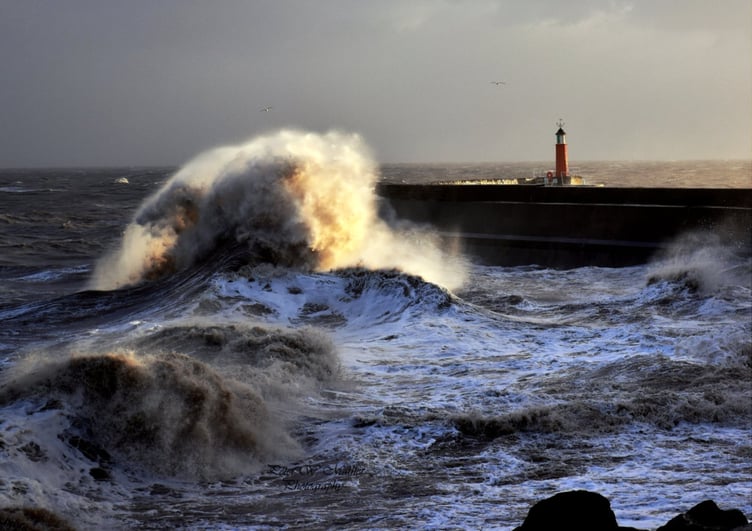
A massive clear-up continued in West Somerset this week after havoc caused by storms Eunice and Franklin destroyed hundreds of trees, blocked roads, demolished farm buildings and left villages without power for up to three days.
As the cost to homes and businesses was still being assessed, civic leaders urged action to establish new local response centres which could co-ordinate help in the event of similar storms in the future.
"We will provide a number that people can ring when faced with emergencies like the one we have just had. Last weekend was extremely stressful for older people - many were without light, heat or telephones and we have to make sure we look after them."

County councillor Mandy Chilcott said West Somerset was one of the worst-hit areas and she paid tribute to residents who had helped council teams deal with fallen trees and other storm damage.
This week, local MP Ian Liddell-Grainger warned that power companies and other utilities needed to reassess their emergency planning arrangements and questioned whether infrastructure such as power lines, needed to be more robust.
Mr Liddell-Grainger said he was ’immensely impressed’ by the way West Somerset communities coped during the storms. "Village halls were turned into emergency centres where people could get hot drinks and all kinds of help, including offers of food being extended to the worst-hit families.
"The fact that so many homes were without power until well after the weekend illustrates the extent of the damage".
As winds reached over 70mph following a Red Warning, Minehead and Watchet coastguard and Minehead RNLI advised people to keep clear of beaches and harbour walls which were pounded by giant waves.
An RNLI spokesman said: "On Friday when Storm Eunice arrived in the area there were actually people surfing at Minehead. They were told just how dangerous that could be."
This week, Somerset County Council teams dealt with 255 storm-related incidents, 235 involving trees - including a blockage of the A396 near Wheddon Cross, seven cases of collapsed walls and fences affecting roads.
Kilve residents were without power for three days and afterwards a community meal was held at the village’s Hood Arms to show appreciation for the efforts of Western Power Distribution workers. One resident said: "They were real heroes."
Western Power operations director Graham Halliday said that last Saturday saw the highest number of power cuts in the company’s history and added: "Our teams worked around the clock in some atrocious conditions.
Large areas of West Somerset, including Dunster, Carhampton, Williton, Watchet and parts of Minehead, were without electricity for over six hours. A drop-in centre was organised at Wiveliscombe fire station to help residents who were without power until Monday.
Porlock resident Jenny Campbell said: "Power failure in Porlock started around 3pm on Friday and many homes were to remain without power until Tuesday.
"We suffered more damage from Storm Franklin than from Eunice."
Porlock toll road was closed until Tuesday because of the danger of falling trees. These included four trees at Hartshanger holiday accommodation on the toll road which pulled a power line to the ground. It did not break but service was cut from Friday to Monday.
Two sheep were killed when Storm Eunice demolished a lambing shed at Sanctuary Farm, Dulverton, and ripped tiles from roofs, destroyed a greenhouse and damaged electricity cables. Sections of the shed were blown 300 yards across a field.
Farmer Bruce Heywood, former chairman of West Somerset Council, said: "If the lambing shed roof had not been caught in a hedge it could have caused great damage to our house."
He added: "We had 50 in-lamb ewes in the shed and our neighbour had 200, two weeks from the start of lambing. Praise be only two were killed - one of ours and one of our neighbour’s."
In Williton a tractor shed on a smallholding belonging to businessman Edward Martin was blown down but the four machines inside were undamaged. "It was like a bomb going off and it was a miracle the tractors survived," Mr Martin said.
Two trees were blown down in the wallaby and emu paddock at Tropiquaria Zoo, Washford, but no serious damage was done and the animals escaped unhurt.
In Lynton, falling trees at Longmead House caused damage to a car.
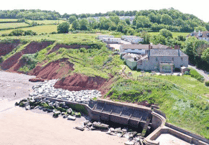
The storms did bring some good news - the Blue Anchor Hotel, for years at risk of sliding into the sea due to crumbling cliffs, survived mountainous seas without damage, thanks to 1,800 tons of rock granite rock armour shoring up the cliffs as part of a £4 million coastal protection scheme.
Hotel owner Cara Strom said: "If the work hadn’t been done, I wouldn’t be sitting here now. For the first time we feel there’s a future here, whatever the weather throws at us."
Comments
This article has no comments yet. Be the first to leave a comment.