
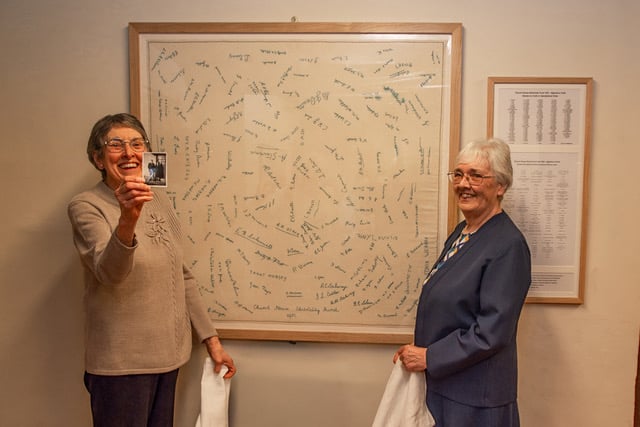
THE unveiling has taken place in a Quantock Hills village of an historic piece of fabric as it returned following a restoration 75 years after its creation.
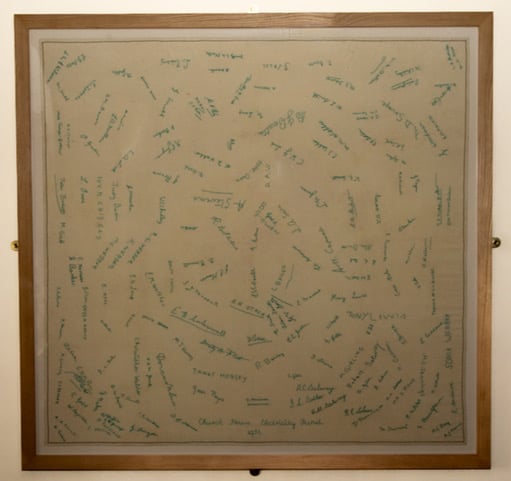
The 1951 ‘Electricity Fund Signature Cloth’ was a fund-raising enterprise to connect power to Church House, Crowcombe, a 16th-century grade II* listed building.
The property, built in about 1515, is one of only two surviving church houses in Somerset.
Thirty villagers gathered in Church House on Monday, March 23, to witness the unveiling.



-Jemma-Evans-TB-nurse-specialist-Kate-East-team-administrator-Kim-Aspinall-TB-nurse-s.png?width=209&height=140&crop=209:145,smart&quality=75)
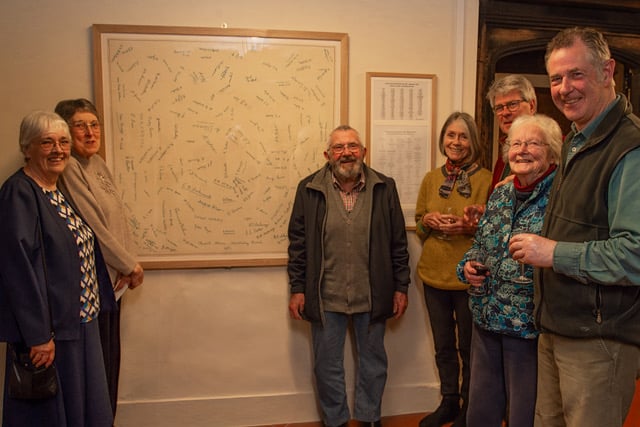
A total of 176 villagers had pledged money in the 1950s to cover the cost of bringing electricity to Church House and each signed the cloth.
Later, their names were carefully embroidered by local resident May Jewell and, according to textile restorer Alison Lister, of Textile Conservation, Bristol, possibly one or two other people.
The cloth was unveiled at the reception by Brenda Smith and her sister Janet March, who are granddaughters of May Jewell.
The sisters said it had been their mother Edna’s long-held wish for the cloth to be returned to Church House.
They said she would have been delighted to know the ‘Signature Cloth’ had been restored and was now on display in the building it helped to support.
The ‘Signature Cloth’ has been carefully restored through the efforts of the management committee, to preserve the names, memories, and social history it represents.
Cleaning and mounting of the cloth were made possible through a bequest by Valori Menneer.
The cloth has been professionally framed by Laura Sturgess, of Quantock Frameworks, Stogumber.
Church House, which was rescued from structural ruin when the then-rector obtained charity status for it in 1907 and began fund-raising for its restoration.
In the 21st century it has undergone two major refurbishments in 2007 and 2016, paid for with external grants and funds raised by the village.
Comments
We've recently changed our login process. If you have an account for commenting, you will need to re-register on the login window.
This article has no comments yet. Be the first to leave a comment.