

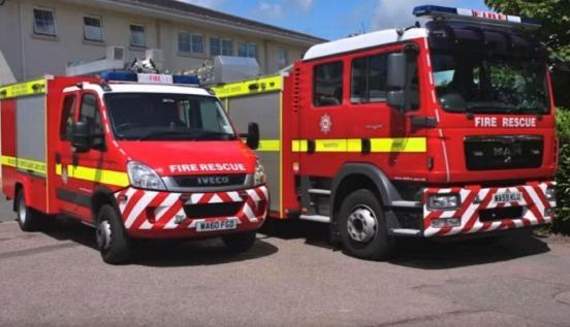
A TEN-minute target to attend fires is impossible to meet in parts of Somerset and Devon, the fire service admits.
The revelation came from the service in a survey asking for the views of the public on their response strategy – the vision for how they respond to fire and rescue incidents.
A 12-week public consultation around proposed changes to Devon and Somerset Fire and Rescue Service will take place this summer.
Proposals in the consultation could include the re-location of personnel, appliances, equipment and even fire stations to enable them to meet their target response times.

Targets currently set for the service involve getting one fire engine to a house fire within ten minutes of a call and to collisions with people reported trapped within 15 minutes.
Bu details within the survey say that some of those targets are impossible to meet due to the largely rural nature of Devon and Somerset.
It adds that failure to meet some of the targets is largely due to the nature of the area and the fact that current locations of services are based on standards from the 1940s, which focused on property types.
The public are currently being asked for their views on the initial proposals to change the way services are delivered.
Responses to the survey will shape the initial proposals for changes to the service, which will go before the fire authority at the end of June as part of the Safer Together programme.
That programme will change the way the service works to ensure it is responding to current and future risks in the two counties.
It says the locations of fire stations and how they are crewed don’t currently address issues the service is facing, such as new large housing developments, people living further away from their places of work, an increasingly elderly population, changes to technology and far fewer fires to tackle.
A spokesman for the service said: “Some areas are really busy, while others have seen a large reduction in incidents.
“We have a number of stations where firefighters are ‘on-call’ – this means they are fully trained firefighters but have other jobs and have to be located within five minutes on the fire stations when they are ‘on-call’.
“Your local station may actually only get a few incidents to respond to and 23 out of our 85 stations, more than a quarter, respond to fewer than ten incidents a year.
“There have been significant changes in both technology and our daily habits which have impacted the number of fires.
“The smoking ban, changes to furniture and furnishing regulations, and even the introduction of the oven chip meaning we deep-fry less, have all contributed to reducing fire risks inside the home.”
As part of the Safer Together programme, firefighter shift patterns, locations of some fire stations, refurbishment or rebuilding of stations, the location of and number of fire engines the service has, new types of fire engines, new equipment for firefighters and introducing shift systems at stations will all be considered.
The service is currently working on the draft proposals, currently planned to go before the fire authority on June 28, and if approved, a 12-week public consultation process will start in July.
No details of the proposals have been revealed, but it is understood some of the 85 fire stations will close and others will be relocated.
The current survey says: “We do not plan on changing the ten minute target response time but want this to be set in context that this is an average.
“In some areas a response will be quicker and in other areas a response will be slower.
“We need to adapt to our ever-changing population. Not only have our lives and habits changed, our population and where you live in Devon and Somerset has changed too.
“In the past few years we have seen significant new housing developments happening across our two counties, and these new developments are continuing to grow.
“This means we need to assess where we are located in relation to this massive population change.
“Through our risk analysis and risk profiling, we also know some people will be more at risk of being involved in a fatal fire due to certain factors, and we need to ensure we are able to take steps to reduce the likelihood of these incidents.
“For example, we know that those aged over 85 have a much higher rate of fatal fires. In Devon and Somerset, it is predicted that the number of people aged over 85 will increase by a third in the next ten years.
“That means we need to take steps to reduce the risk of incidents happening, through our prevention work.
“As part of our Safer Together changes we will be freeing up crews to get out into the community to carry out prevention work.
“We will soon be launching our Safer Together public consultation, to give you the chance to have your say in the future of our service.
“Not only will the programme save public money, it will mean we can be a more efficient, fit for purpose, high performing fire and rescue service that you can be proud of.”
Comments
This article has no comments yet. Be the first to leave a comment.