

Farmers help to protect Exmoor environment
A Defra-funded trial on 26 Exmoor farms and smallholdings is helping to discover the true cost of providing environmental benefits to the public in the national park.
It is hoped the findings will help identify ways to better support farmers in protected landscapes ahead of the transition to the Government’s new flagship scheme for environmental land management.
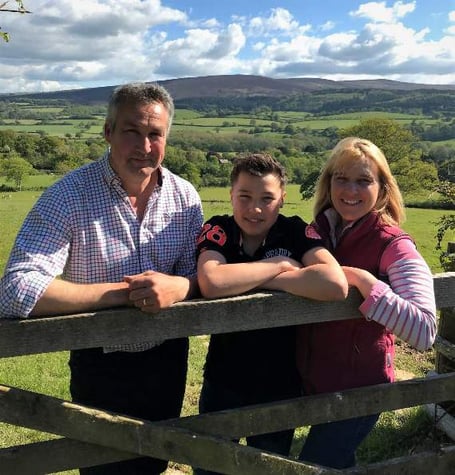
Chris and Paula Williams work in partnership with Chris’s parents to run two farms on Exmoor – a family-owned Exmoor hill farm on the edge of Winsford Hill and a National Trust tenanted farm on the Holnicote Estate, near Minehead. They are now in the process of setting up a luxury glamping enterprise.




Commenting on why they got involved in the trial, Paula said: “For us it’s about building resilience across our farms to help sustain the business and ensure that a future in farming is as viable for the next generation.
“We want to get to know every aspect of our farm’s potential and play our part in helping Defra understand the true contribution hill farming makes towards caring for the landscape.”
Robert Deane, of Rural Focus, said: “We combined several layers of data to build a picture of what each farm delivers for the environment, and for people, and have created heat maps to show the potential to scale up these activities”
Key findings which have been fed back to Defra include:
n Sites such as heather moorland, wetlands and wood pasture were identified as particularly vulnerable, because the grazing regimes that sustain them often only marginally benefit the farm business;
n Helping to create nature corridors or deliver improvements to water quality or flood resilience;
n More research is needed to be able to quantify aspects such as cultural heritage, historic features, wildlife, public access and engagement.
Dave Knight, chairman of the Exmoor Hill Farmers Network, said: “An idea that started with farmers around the kitchen table has grown into a living example of how the future of farm policy might work under a new system of awarding public money for public goods.
“About 56 per cent of the national park is farmland and we hope this report goes some way towards demonstrating to government what we have to offer, and how best our industry can be supported to deliver multiple benefits for people and nature.”
Alex Farris, conservation manager at Exmoor National Park Authority, who led the trial, added: “What’s been particularly encouraging about this trial is the opportunity for farmers to link up their assets, like field margins, hedgerows, wood pasture and restored hay meadows, to make an even greater contribution.
“It’s this kind of landscape scale nature restoration that hasn’t been achievable until now and that could prove the lifeline for many of our native species as we face the realities of climate change.”
Comments
This article has no comments yet. Be the first to leave a comment.