
WILLITON district councillor and newsagent Hugh Davies is considering going to the High Court in a bid to clear his name and recoup thousands of pounds in legal costs incurred when he was reported to the Standards Board of England. He exclusively told the Free Press this week he was thinking of taking action to claw back £13,000 in legal fees after learning the Standards Board employee who investigated him had resigned and been criticised for the methods used in another investigation. He has been further encouraged by a former North Dorset councillor taking his case to the High Court and winning after a judge threw out the Standards Board's case against him and reinstated him as a councillor. Cllr Davies - who served a year's suspension from his council duties at the hands of the Adjudication Panel for England - said he was determined to clear his name and recoup his costs. He believes taking his case to the High Court could enable him to force West Somerset Council to pay his legal costs if he too is successful in using the legal system to overrule the findings of the Standards Board and Adjudication Panel quangos set up by Deputy Prime Minister John Prescott. He said a group of councillors from Islington Borough Council had secured a formal apology from a tribunal over the methods used by one of the Standard Board's ethical standards officers Nick Marcar, who investigated Cllr Davies' own case. Mr Marcar was criticised for directing the Islington investigation "to obtain evidence to support conclusions which the ethical standards officer had already reached". The tribunal also told the Islington councillors their council should pay their legal costs as they had been cleared of the allegations. Cllr Davies said: "If I can clear my name I have a good chance of pursuing the council for my legal costs although I am concerned about the impact this might have on the taxpayers of West Somerset." Traditionally, Cllr Davies has refused to accept any allowance payments for his work as a councillor, only seeking back payments when he was faced with a huge legal bill. Even then, he had to use hard earned savings to clear his debt using money he had put aside for a once in a lifetime rugby tour of New Zealand. Cllr Davies said he planned to contact former North Dorset Conservative councillor David Adami who had successfully fought his case in the High Court. He said he believed his case had been strengthened by the public criticism of Mr Marcar and the fact it was stated at his own hearing that key evidence used against him had been trawled from the memory of an investigating officer and not written down at the time of an interview. "No-one even bothered to ask the people at the centre of the allegations where they got their information from," Cllr Davies said. As reported in the Free Press in March 2005, Cllr Davies was suspended from his council duties for a year despite the fact he was found not to have acted out of either self-interest or for financial gain. The punishment was meted out after he was found "guilty" of two counts of breaching West Somerset Council's code of conduct. Although he rigourously denied both allegations, the panel concluded Cllr Davies had breached the code by "confirming" confidential information about top officers' salaries to a Taunton-based newspaper and had failed to declare an interest and leave cabinet meetings when the authority's then move to centralised offices in Minehead was discussed. He had initially been reported to the national council watchdog the Standards Board of England by former Tory district councillor Stan Taylor for allegedly revealing confidential information to a newspaper. The second charge was brought by the standards board itself following a separate investigation into other councillors who were all later exonerated. Of the first case, the panel concluded that Cllr Davies had disclosed confidential information by "corro- borating" salary figures put to him by a trainee reporter and which had been given to councillors in confidence. The newspaper article itself did not directly attribute the figures as coming from Cllr Davies, who denied leaking the information to the paper. The reporter involved was not asked to give evidence at Cllr Davies' hearing and was unaware his article was even being used against Cllr Davies until a report on the case appeared in the Free Press. The panel also felt that, as Cllr Davies owned both a residential and a business property across the road from the council's current Williton offices, he was likely to be financially affected by the authority's then planned relocation to Minehead. They believed the fact Cllr Davies was a member of the Williton Chamber of Commerce - which objected to the office move on the basis it would have an adverse impact on businesses in the village - compounded the case against him by turning a personal interest into a prejudicial one. But the panel was adamant Cllr Davies was not acting out of self-interest and added: "The financial effect upon Cllr Davies and business were not the driving force behind his opposition to the council's proposals."
 Williton Danesfield Middle School to welcome pupils again after storm damage closure
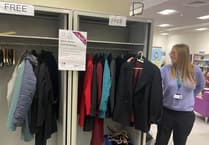 West Somerset libraries continuing to offer free winter coat exchange
  Allied Pharmacies brothers update MP Rachel Gilmour on rescue of Jhoots branches
 Best-ever rating for pupil dining experience in Williton St Peter's First School