
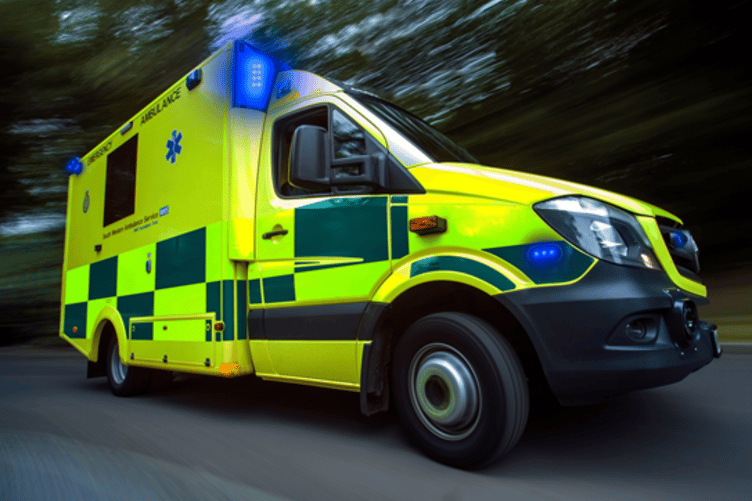
People in Somerset are being advised to only dial 999 in a life-threatening emergency when ambulance workers go out on strike in a pay dispute on Wednesday, December 21.
The industrial action by union members working for the South Western Ambulance Service will affect non life-threatening calls and involve paramedics, control room staff and support workers.
Picket lines are planned across the region on Wednesday, including in Bridgwater and Taunton, as members of the GMB and Unison unions walk out, the GMB from 6am to midnight, and Unison from midday to midnight. GMB members are also due to strike again in the South West a week later, on Wednesday, December 28.
NHS bosses have urged hospital managers to move people out of emergency departments as soon as possible to cope with disruption on strike days, and to clear hospital beds by sending as many patients as possible home.


The Government has put the military on standby to drive ambulances in the South West region during Wednesday’s strike, which will involve nine regions across England, but it is unclear whether they will be deployed in Somerset.
Patients who are fit to go home have been kept in hospitals due to a lack of home care, causing a knock-on effect of bed shortages which has seen ambulances queuing and unable to offload into emergency departments.
The South Western Ambulance Service earlier warned people to only call 999 in a life-threatening emergency during industrial action, which started last week with the nurses’ strike, although that did not affect hospitals in Somerset. There will be a second day of action by nurses on Tuesday, the day before the ambulance strike which will involve the South Western Ambulance Service.
The ambulance trust said in a statement: “A combination of the cold weather, busy hospitals and the likely impact of the upcoming health service strikes are all contributory factors to the challenges the service is facing.
“On days where there is strike action, patients should only call 999 if it is a medical or mental health emergency [when someone is seriously ill or injured and their life is at risk]. Ambulances will still be able to respond in these situations, but this may only be where there is the most immediate risk to life.
“Where the situation is not life-threatening, alternative support will be available through NHS 111 online or through calling NHS 111, and where possible, it is advised that you arrange alternative transport.”
NHS staff have been offered an average rise of 4.75%, with a guaranteed minimum of £1,400. The Government says the increases have been recommended by an independent pay review body, and the above-inflation rises asked for by the unions are unaffordable.
Rachel Harrison, GMB National Secretary, said: “After twelve years of Conservative cuts to the service and their pay packets, NHS staff have had enough. The last thing they want to do is take strike action, but the government has left them with no choice."
Will Warrender, chief executive at the South Western Ambulance Service, said: “Please help us to help those patients who need us most by only calling 999 if a patient has a life-threatening condition or illness.
“We know there are patients waiting for an ambulance, and we will get to you as soon as we can. We are sorry that we are unable to respond as quickly as we would like.
"We are doing all we can to manage winter pressures and the upcoming industrial action, including receiving military support during industrial action days which will allow our ambulance clinicians to crew more ambulances and reach patients more quickly.
“The public can help us by only calling 999 for life threatening emergencies, we absolutely must have crews available for the most life-threatening conditions and we will be prioritising these patients.
“Please do not call back asking for an estimated time of arrival of an ambulance. We cannot provide this information and it blocks our lines from other callers reaching us.
“If the condition of a patient is not life-threatening we may direct you to alternative services. So please help us by accessing the right service for the care you need.
“I’d like to express my huge thanks to our people and NHS partners working to deliver the best possible care they can for our patients over the coming weeks.”
Comments
This article has no comments yet. Be the first to leave a comment.