

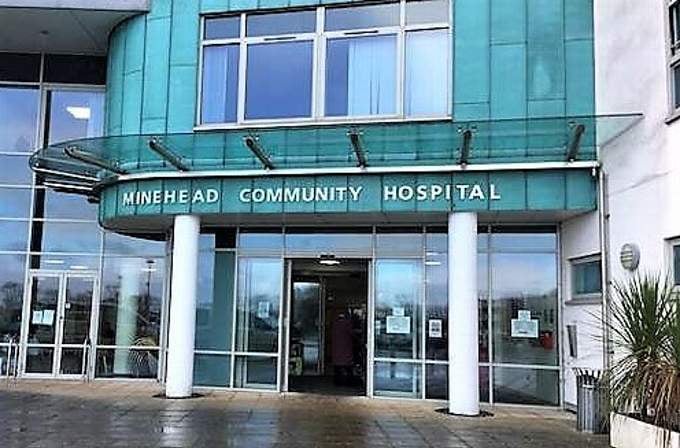
NHS bosses were this week urged to reverse their decision to permanently close Minehead’s Minor Injuries Unit (MIU) at night.
Minehead Mayor Cllr Paul Bolton and former West Somerset district councillor Bryan Leaker both spoke out against the decision.
Cllr Bolton said he was deeply disappointed by last week’s announcement from Somerset NHS Foundation Trust.
He said: “This is going to have really bad knock-on effects for the people of Minehead and the rest of West Somerset, especially as we have an elderly population.
 Budget gap cut by £28 million but Somerset Council still at risk of going bankrupt
 Council abandons planned improvement of A39 cycling route from Dunster to Carhampton
 Check out latest planning applications across West Somerset and Exmoor
 Council postpones A396 fatal coach crash road repairs project by a month
“We all pay the same National Insurance contributions as the rest of the country but we don’t seem to be getting back the same NHS value that other places see.
“The MIU has always been a safety net for parents and the elderly, even if they have not needed to use it. It provides reassurance knowing the MIU is there if you need it at night.
“I really urge them to reconsider and open it back up at night.”
Ex-councillor Bryan Leaker, who previously was director of the Butlin’s holiday centre in Minehead, said he had broken down each of the arguments used by the trust to justify its claim that it was unsafe to keep the unit open.
Mr Leaker evaluated the risk in the reduction of healthcare provision resulting from the reasons given and said in each case the points made by the trust failed to stand up to proper scrutiny.
He said historically the MIU employed nurse practitioners with a ‘Band 7’ qualification with a salary to match.
Most of those senior professionals had since moved on, however, and replacement roles were advertised only as ‘Band 5’, which was the standard for a nurse, although the trust expected them to have ‘significant experience’.
Mr Leaker said nurse practitioners would have had extra training for their role, which was not possible to achieve on the lower band.
The trust claimed the MIU was only seeing on average of one person a night but Mr Leaker said he was told that was incorrect because it only counted patients seen after midnight, whereas many attended earlier.
He said the closure suggested the trust had ‘thrown the ambulance service under the wheels’ because with no GP service available in the evening and at night, people would use the 999 emergency line and put additional pressure on ambulances which were already unable to meet targets in West Somerset and Exmoor.
Mr Leaker said the 111 service would suggest patients attended the MIU but that would not be possible now, seeming to indicate the trust did not care enough for the residents of Exmoor and West Somerset.
He said: “Now, you cannot even get an inhaler if you have an asthma attack. If you have a minor injury/symptom that requires attention but you are unable to get to Taunton, an ambulance will be required, but this could prevent that ambulance from responding to a major event within the county.”
Although the trust promised a review after the temporary closure it then took a permanent decision without any consultation, put pressure on a sister service already creaking in terms of delivery.
“This clearly demonstrates no joined up working with the ambulance service,” said Mr Leaker.
He said If the trust was so minded, it could work on a plan which overall would deliver savings.
By increasing the salary band of the nurse practitioners there could be applicants who would deliver more services in the community, reducing the pressure on the ambulance service and giving better healthcare in the community.
“This requires joined up thinking and the engagement of all key partners,” said Mr Leaker. “Unfortunately, we have a trust only interested in balancing the budget, a trust which does not care for the community it needs to serve, and with over 60 per cent retired there is no service offer in West Somerset.
“The Trust should reverse the decision and should then work with key opinion formers and local groups to review the service, not in isolation but by partnership working, which the trust have failed to do.”
Otherwise, he said the NHS trust would be failing West Somerset and risking the lives of residents.
Comments
This article has no comments yet. Be the first to leave a comment.